A forklift for granite slabs must be selected around the complete load, attachment and travel route. The model name or nominal capacity is not permission to lift every slab of that weight.
Begin with slab or bundle weight, dimensions, center of gravity and any boom, clamp or other attachment. Added attachment weight and a load held farther from the carriage can reduce usable capacity. Use the manufacturer-approved capacity plate for that attachment, load center and lift height. Do not use a model’s headline rating as the working capacity for a different setup.
Plan the route first
Measure receiving access, aisles, turning areas, overhead clearances, door openings and the height of the rack or truck you must reach. Check the slab’s travel envelope as well as the forklift chassis. Confirm floor loading, ramps, thresholds and operating-surface conditions with the appropriate specialists. A truck that fits an empty aisle may not have adequate room with a long slab load.
Next Level LPG choices
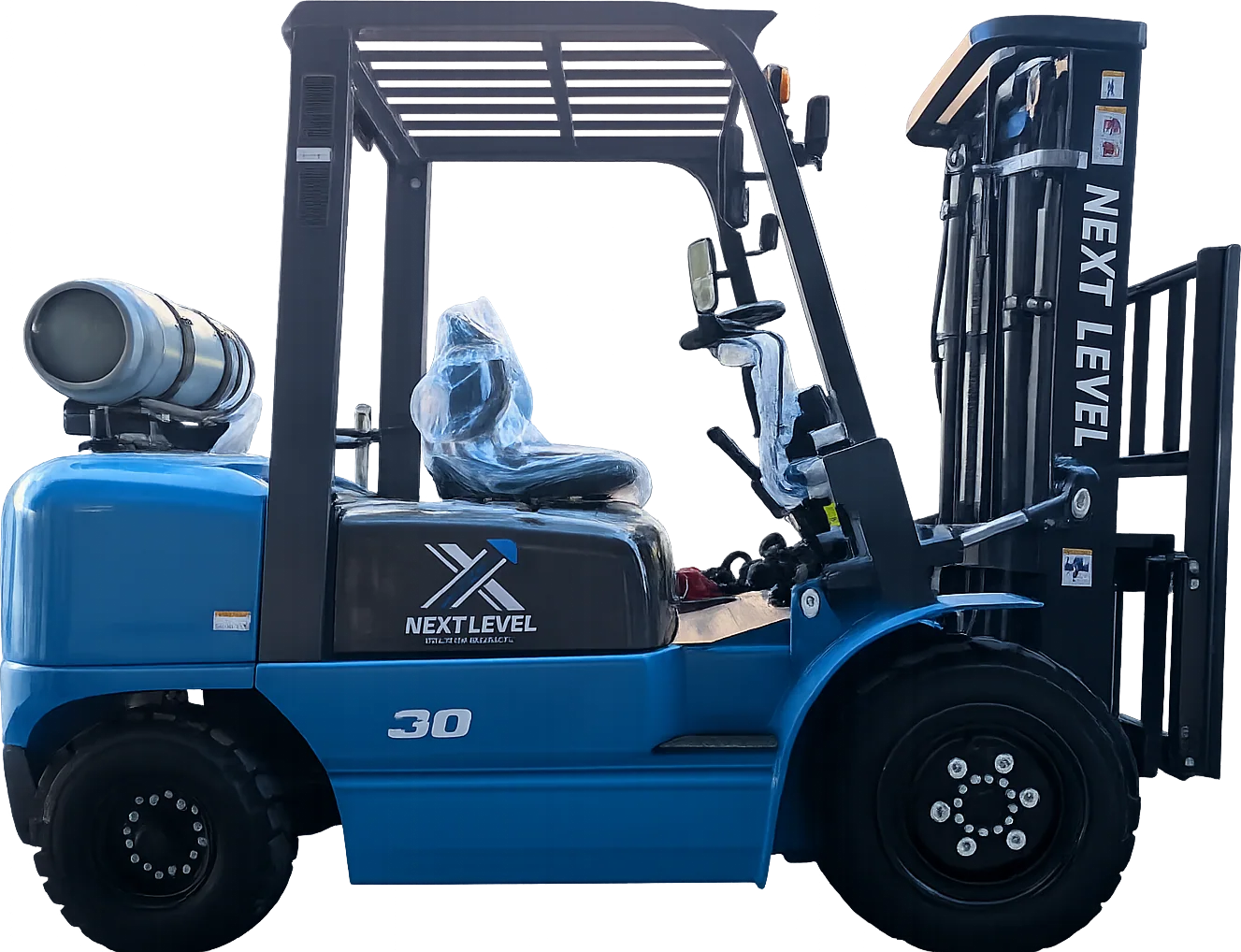
Next Level’s forklift range includes the established 5000, 6000, 10000 and 15000 model pages. The Forklift 6000 is a 3-ton class LPG truck with Kubota WG2503 engine, full-free three-stage mast, side shift and 1,520 mm forks. Its catalog nominal capacity is 3,000 kg (6,614 lb), subject to the approved plate and setup; the “6000” name is not an exact universal lifting limit. Review each model’s own mast, height, dimensions and configuration with sales.
Compare the right category
HELI America’s official product search separates LPG, diesel and electric forklifts and further distinguishes cushion, pneumatic and other application classes. If comparing HELI with Next Level, identify the exact truck, mast, tire type, attachment and fuel system before discussing capacity or price. An electric warehouse truck or rough-terrain forklift is not automatically a direct substitute for an LPG stone-shop configuration. This guide does not assert a model-for-model HELI equivalence.
Operating requirements
Confirm the appropriate fuel and ventilation plan for the location; LPG equipment needs an operating environment assessed for exhaust exposure. Identify operator training, inspection routines and traffic separation before delivery. Ask the supplier to document attachment approval, residual capacity and service support. Fork extensions and long forks do not increase rated capacity. Do not improvise a slab-lifting method from a generic brochure: have the supplier approve the complete handling arrangement.
Compare the quote
Use the same requirements for every supplier. Download a blank worksheet, keep one copy per proposal, and record the written evidence behind each answer.
Approved lifting configuration. Request the approved capacity plate for the exact truck, mast, attachment, load center and lift height. Include attachment weight.
Loaded travel route. Record the slab envelope, turning space, doors, overhead clearance, grades and floor conditions. Have the complete route reviewed.
Fuel and work environment. Request the fuel, tire and ventilation requirements for the actual indoor or outdoor operating conditions.
Utilities and site work. Request the electrical, water, air, drainage, clearance and foundation requirements that apply to the quoted configuration. Identify who supplies each connection.
Complete quoted cost. Separate equipment, options, tooling, freight, tax, rigging, installation and training. Identify exclusions and the quote currency and validity.
Delivery and acceptance. Request the written delivery estimate, unloading responsibilities, commissioning scope and acceptance procedure.
Service and consumables. Request warranty terms, support coverage, consumable part numbers, maintenance intervals and quoted parts lead times.
Documented configuration. Keep the dated proposal, exact model and configuration, manuals and supplier answers together. Resolve conflicting specifications in writing.
Opens in spreadsheet software. Next Level does not receive the information you enter in your downloaded worksheet. This worksheet is not engineering approval or a purchase contract.
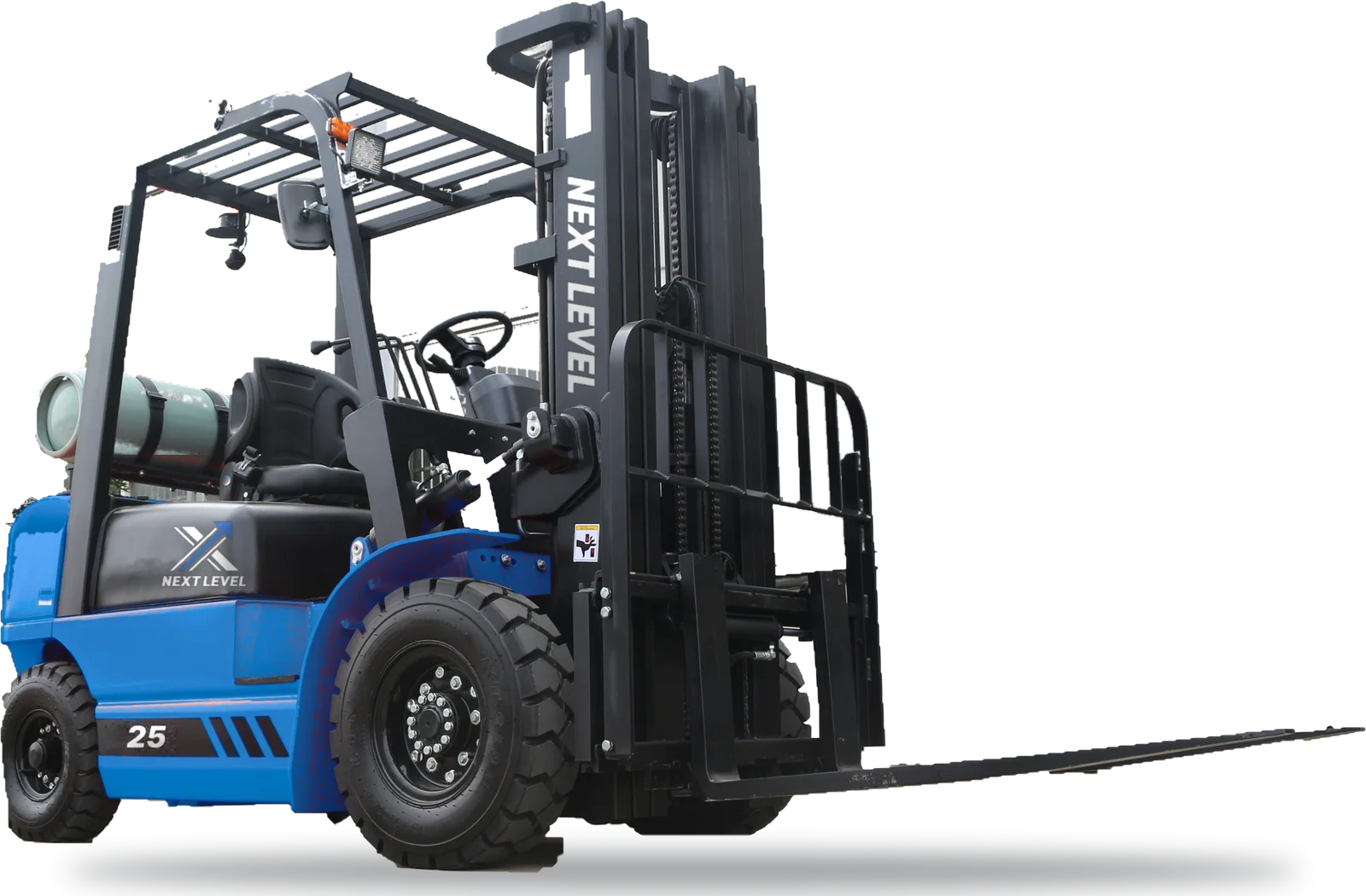
A 2.5-ton class LPG forklift with Kubota WG2503 power and an automatic transmission. The 4.5 m full-free three-stage mast lifts to 14 ft 9 in, and the side shift and 1,520 mm (5 ft) forks are included.
A 3-ton class LPG forklift with Kubota WG2503 power and an automatic transmission. The 4.5 m full-free three-stage mast lifts to 14 ft 9 in, and the side shift and 1,520 mm (5 ft) forks are included.
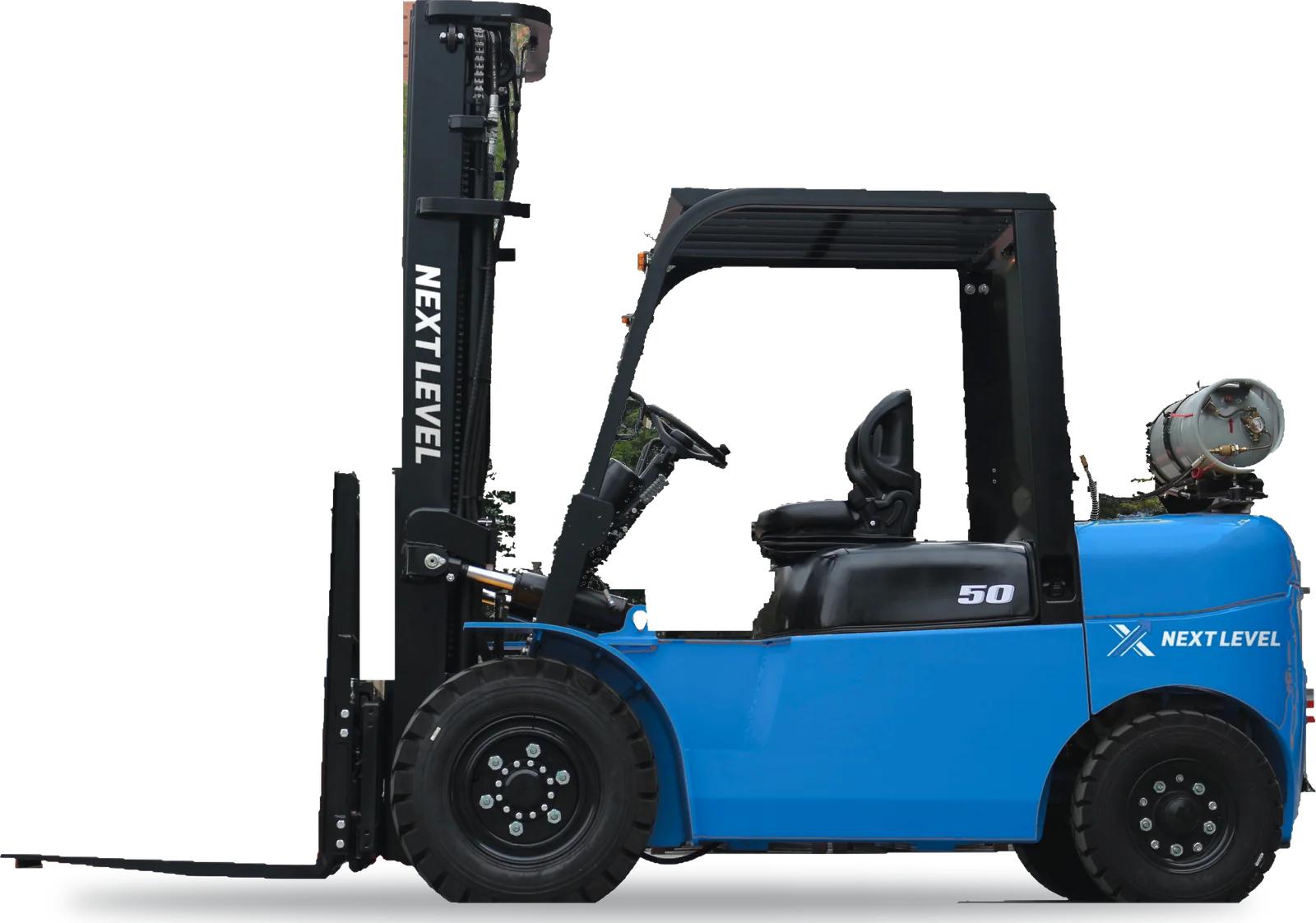
A 5-ton class LPG forklift with Kubota WG3800 power and an automatic transmission. The 4.5 m full-free three-stage mast lifts to 14 ft 9 in, and the side shift and 1,520 mm (5 ft) forks are included.
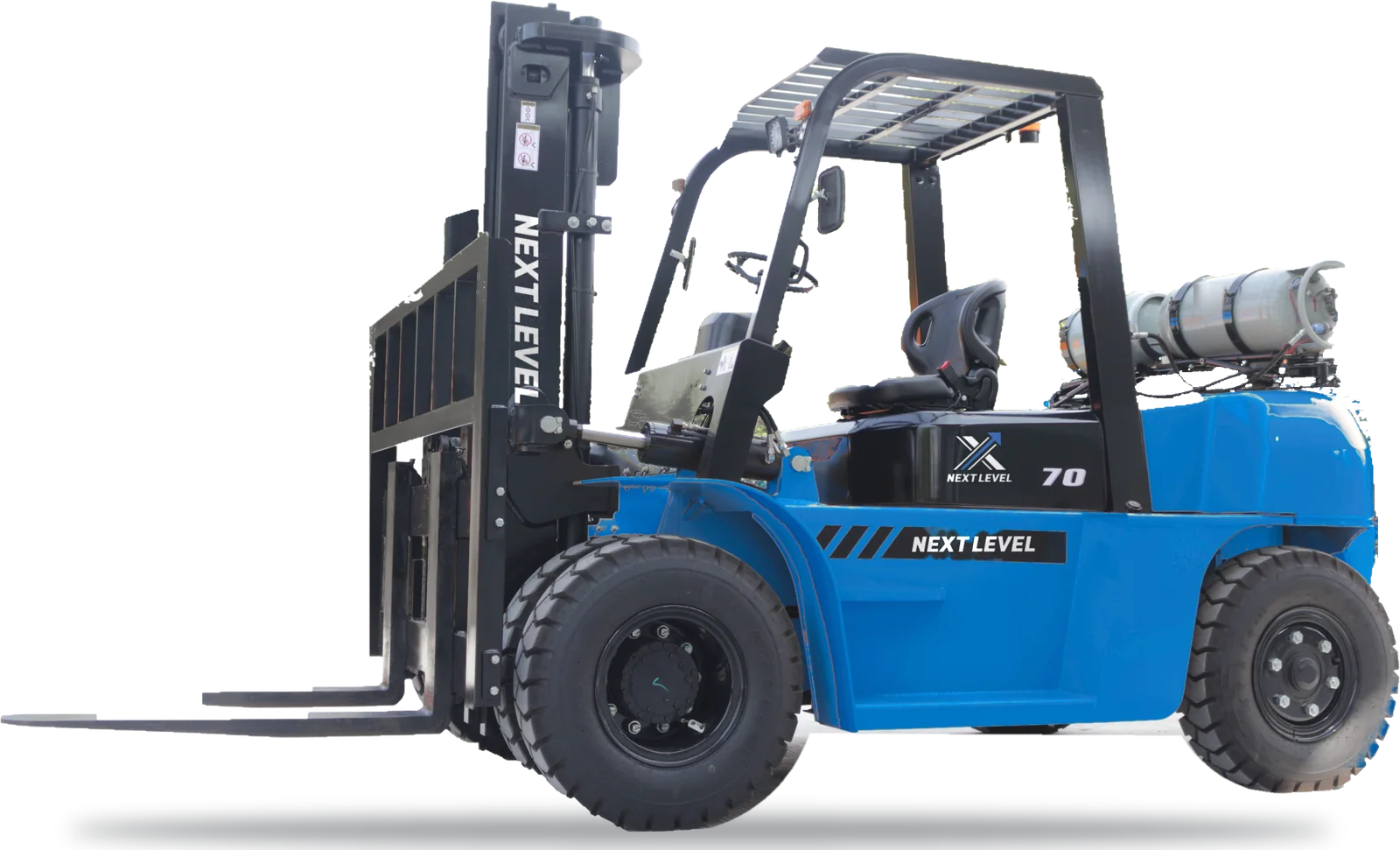
A 7-ton class LPG forklift with Kubota WG3800 power and an automatic transmission. The 4.5 m full-free three-stage mast lifts to 14 ft 9 in, and the side shift and 1,520 mm (5 ft) forks are included. Two LPG cylinders and dual front tires.
Official fuel and application categories; no model-equivalence or capacity claim.
Buying questions
Does a bigger forklift solve every slab job?
No. Load center, attachment, reach, lift height, access and the approved capacity plate all matter. Have the entire handling configuration reviewed.
Are attachments included?
Use the product page and your written quote to identify included forks and side shift. Confirm any slab clamp, boom or other attachment and its approved capacity separately.
Can a forklift lift its rated load with a slab boom?
Not necessarily. The attachment and its reach change the load arrangement. Use the manufacturer-approved capacity plate for the specific truck, attachment, load center and lift height.
Pure Cycle is a closed-loop filter press water recycling system made for the stone and granite fabrication industry. Compare filtration, process-water supply and solids handling against your shop’s requirements.
Choosing a CNC for granite starts with the work you need to finish: straight cuts, miters, drilling, milling or waterjet inside corners. Axis count alone does not tell you which operations a machine can complete.
A 3-in-1 compressor combines a rotary screw compressor, air dryer and receiver tank in one package. For a fabrication shop, compare delivered airflow and air quality at the required pressure, not horsepower alone.
A vacuum lifter robot for granite must move and position the slab safely at the actual reach you need. Compare a self-propelled robot with another robot, not just with a below-hook suction frame.
Machining a finished edge and cutting an inside corner are different jobs. Choose the cutting process and tooling before comparing spindle power or axis count.
Start with the surface you need to finish: a slab face, a straight edge or a particular profile. Different polishing machines are designed for different work.
A site template records where the countertop must fit. A slab scan records the material you will cut. Connecting both correctly is the important workflow.
Plan the path from receiving to storage, fabrication and dispatch. Select each rack, cart, table and attachment for the actual load and the approved handling method.
Choose crane coverage around the pickup and placement locations. A lifting capacity alone does not define the reach, structure or complete installed system.