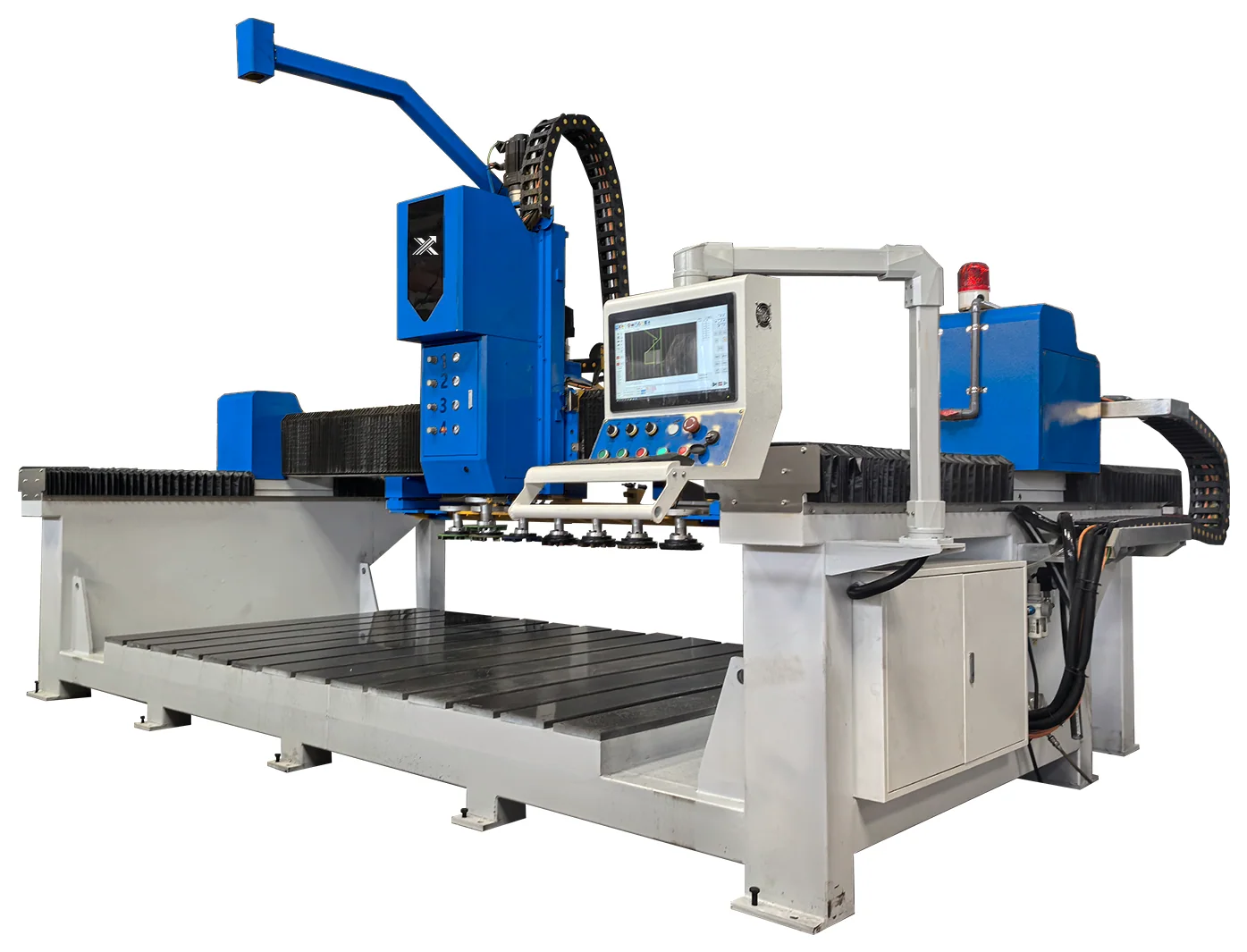
Start with the surface you need to finish: a slab face, a straight edge or a particular profile. Different polishing machines are designed for different work.
Phoenix is a CNC stone surface polisher. Flash Plus and Eco Flash are edge-polishing ranges. A machine intended for a slab face is not simply a larger edge polisher. Write down the finished geometry, gloss or texture, thickness and material before discussing head counts. Ask the supplier to confirm each required profile and finish.
Compare head configurations
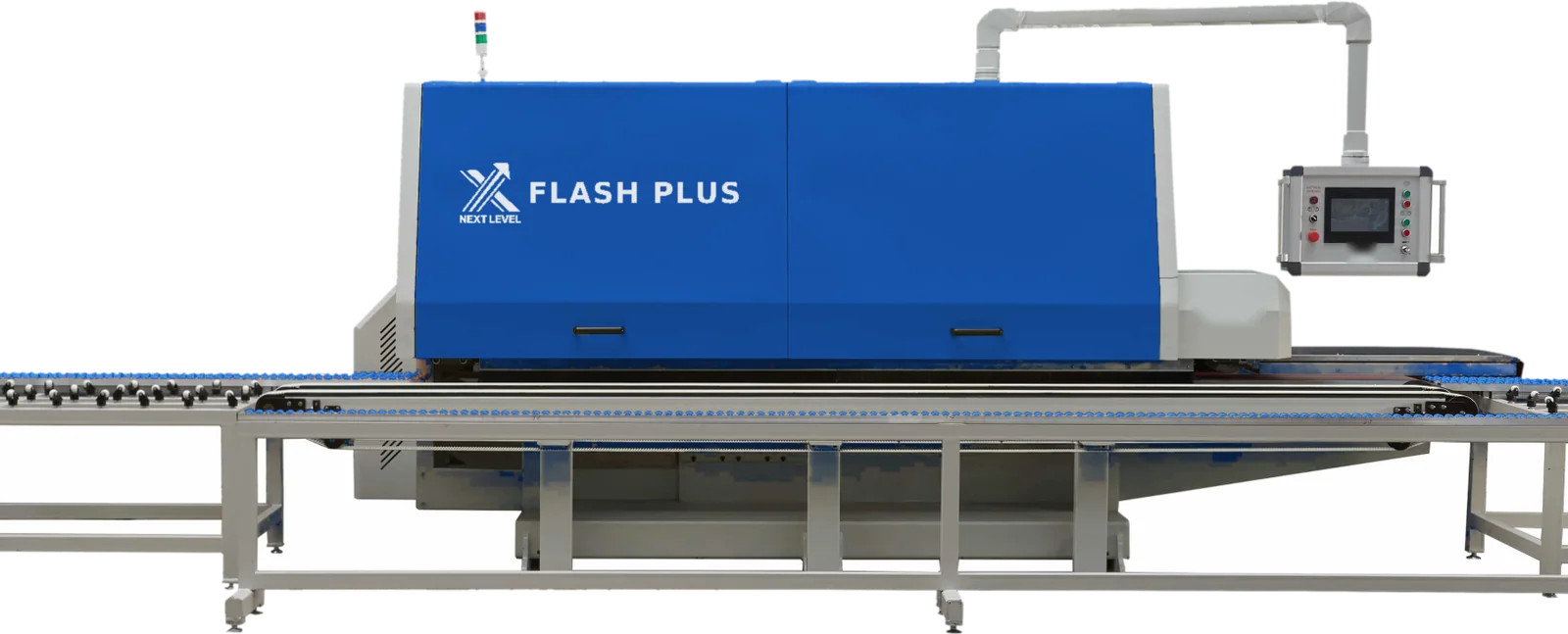
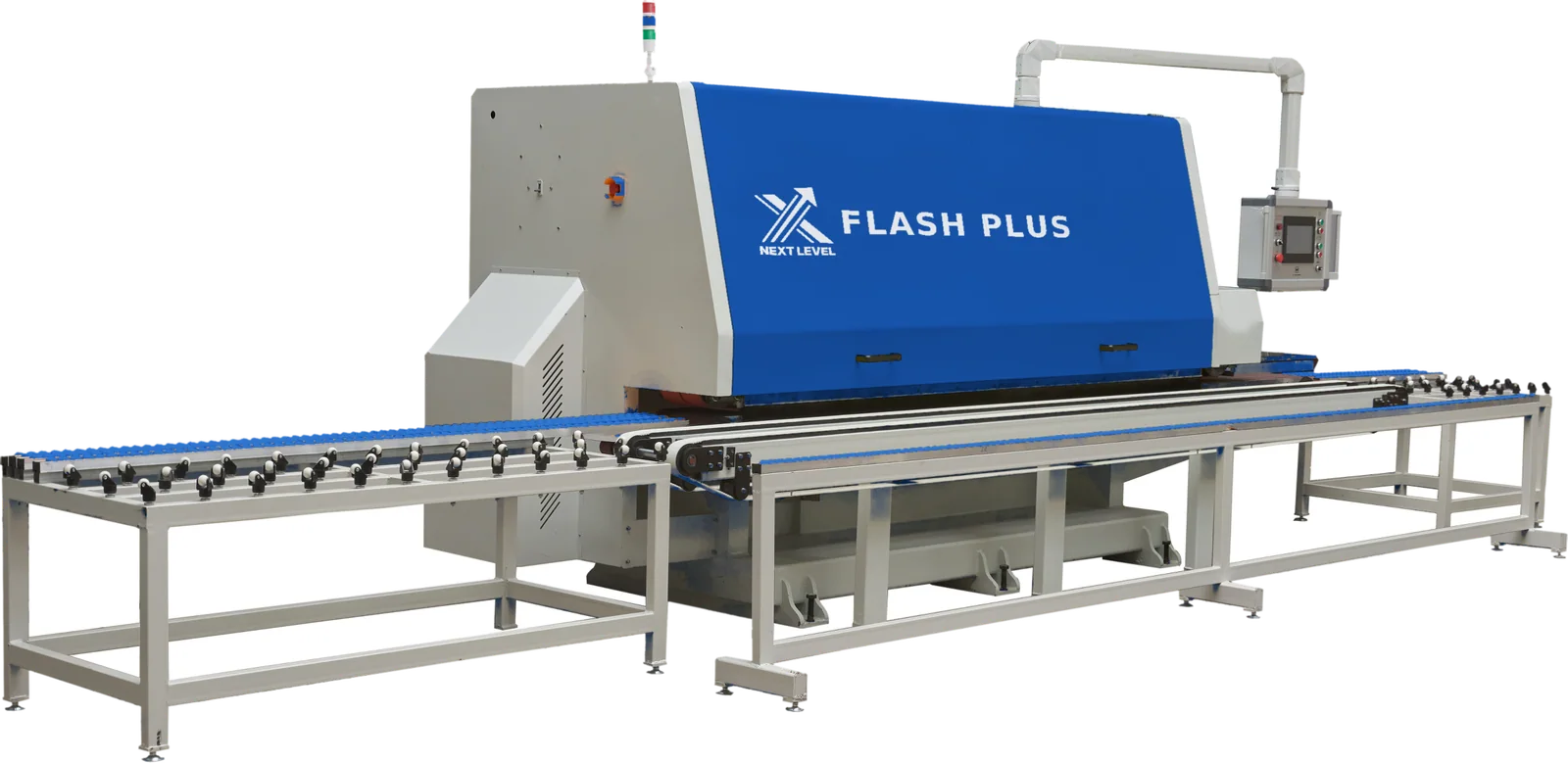
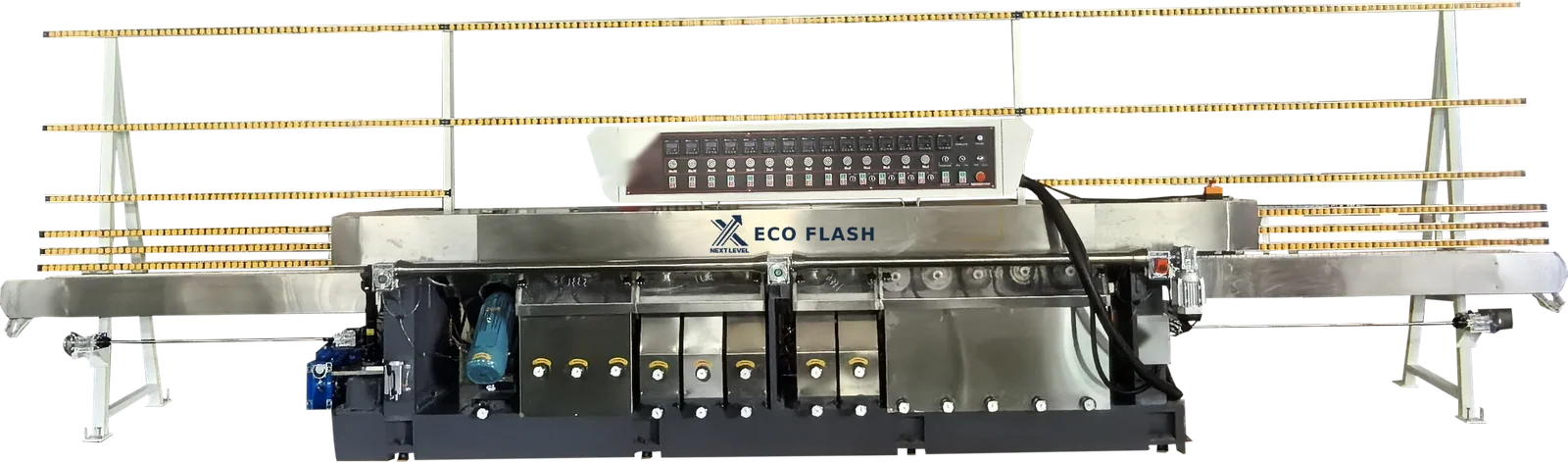
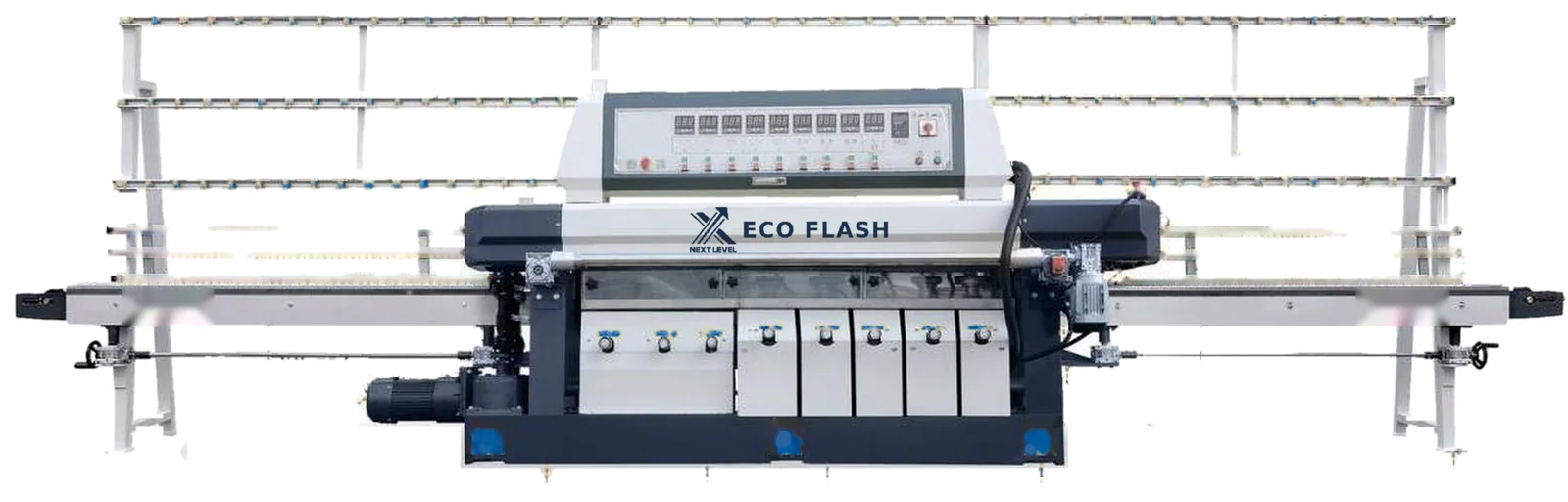
Flash Plus 15 and Flash Plus 10 are horizontal inline edge polishers: the slab lies flat on the conveyor. Eco Flash 14 and Eco Flash 8 are vertical inline edge polishers: the slab stands upright between conveyors. Compare within the appropriate orientation before reviewing head count. More heads alone do not prove higher finished output: compare the functions assigned to each head, abrasive sequence, feed settings, allowable workpiece sizes and operator involvement. Use each product’s technical schedule rather than extrapolating from its name.
Test the finish you sell
Bring your granite, quartz or other proposed material to the application review. Agree on the finished edge or surface and inspect samples under consistent lighting. Track setup, loading, handling between passes and rework as well as machine time. Ask what changes when switching thickness, material or finish and which abrasives and fixtures the quote includes.
Fit the production line
Measure infeed and outfeed space with the actual workpiece, not just the machine footprint. Confirm water, air and electrical requirements, splash containment, cleaning access and abrasive replacement procedures. Ask how the operator supports long or fragile pieces. Include handling equipment and water treatment in the installation plan without assuming they are included in the polisher price.
Compare the quote
Use the same requirements for every supplier. Download a blank worksheet, keep one copy per proposal, and record the written evidence behind each answer.
Profile or surface. Specify whether the finished work is a slab face, straight edge or shaped profile, including material and thickness.
Accepted finish sample. Request a sample under consistent lighting. Record handling between passes, manual finishing and rework as well as machine time.
Heads and abrasives. Request the exact head configuration, abrasive sequence, changeover procedure and consumables included for that finish.
Utilities and site work. Request the electrical, water, air, drainage, clearance and foundation requirements that apply to the quoted configuration. Identify who supplies each connection.
Complete quoted cost. Separate equipment, options, tooling, freight, tax, rigging, installation and training. Identify exclusions and the quote currency and validity.
Delivery and acceptance. Request the written delivery estimate, unloading responsibilities, commissioning scope and acceptance procedure.
Service and consumables. Request warranty terms, support coverage, consumable part numbers, maintenance intervals and quoted parts lead times.
Documented configuration. Keep the dated proposal, exact model and configuration, manuals and supplier answers together. Resolve conflicting specifications in writing.
Opens in spreadsheet software. Next Level does not receive the information you enter in your downloaded worksheet. This worksheet is not engineering approval or a purchase contract.
Flash Plus 15 lays the slab flat on a variable-speed belt and grinds, profiles and polishes the edge in one pass, rough to fine: flat, laminated and beveled edges plus French and Roman profiles. A 10-inch touchscreen stores a recipe for each edge, and the clamping sets itself to the slab thickness.
Flash Plus 10 lays the slab flat on a variable-speed belt and grinds, profiles and polishes the edge in one pass, rough to fine: flat and laminated edges with upper and lower bevels. A 10-inch touchscreen stores a recipe for each edge, and the clamping sets itself to the slab thickness.
Eco Flash 14 grinds and polishes arc, French and straight edges and adds small top and back chamfers, all in one pass. The slab stands upright between two conveyors; for each edge shape the operator picks the matching group of heads and sets them by handwheel.
Eco Flash 8 polishes straight edges and 45° chamfers in one pass. The slab stands upright between two conveyors and rides over eight heads: five for the flat bottom edge, three for the chamfer. Each head is set by hand, so there is no PLC to program.
Phoenix hones, polishes and textures the face of slabs and countertops by CNC. A 20-megapixel camera finds every piece on the table, and an automatic tool changer picks from 20 grinding heads: 10 ride on the bridge, 10 wait in a floor magazine. One standard machine: galvanized, with doors, back panel and a tilting table.
Choose the configuration that produces your required finished work. Compare head functions, material and thickness limits, tooling, changeovers and demonstrated output rather than head count alone.
Pure Cycle is a closed-loop filter press water recycling system made for the stone and granite fabrication industry. Compare filtration, process-water supply and solids handling against your shop’s requirements.
Choosing a CNC for granite starts with the work you need to finish: straight cuts, miters, drilling, milling or waterjet inside corners. Axis count alone does not tell you which operations a machine can complete.
A 3-in-1 compressor combines a rotary screw compressor, air dryer and receiver tank in one package. For a fabrication shop, compare delivered airflow and air quality at the required pressure, not horsepower alone.
A forklift for granite slabs must be selected around the complete load, attachment and travel route. The model name or nominal capacity is not permission to lift every slab of that weight.
A vacuum lifter robot for granite must move and position the slab safely at the actual reach you need. Compare a self-propelled robot with another robot, not just with a below-hook suction frame.
Machining a finished edge and cutting an inside corner are different jobs. Choose the cutting process and tooling before comparing spindle power or axis count.
A site template records where the countertop must fit. A slab scan records the material you will cut. Connecting both correctly is the important workflow.
Plan the path from receiving to storage, fabrication and dispatch. Select each rack, cart, table and attachment for the actual load and the approved handling method.
Choose crane coverage around the pickup and placement locations. A lifting capacity alone does not define the reach, structure or complete installed system.