Machining a finished edge and cutting an inside corner are different jobs. Choose the cutting process and tooling before comparing spindle power or axis count.
A CNC router removes material with rotating tools. A waterjet cuts with a high-pressure jet and abrasive. Choose around the actual operation: edge profiling, drilling, milling, through-cutting or bevel cutting. Neither process automatically replaces all finishing work. Ask for a representative completed part, not just a cutting demonstration.
Match the platform
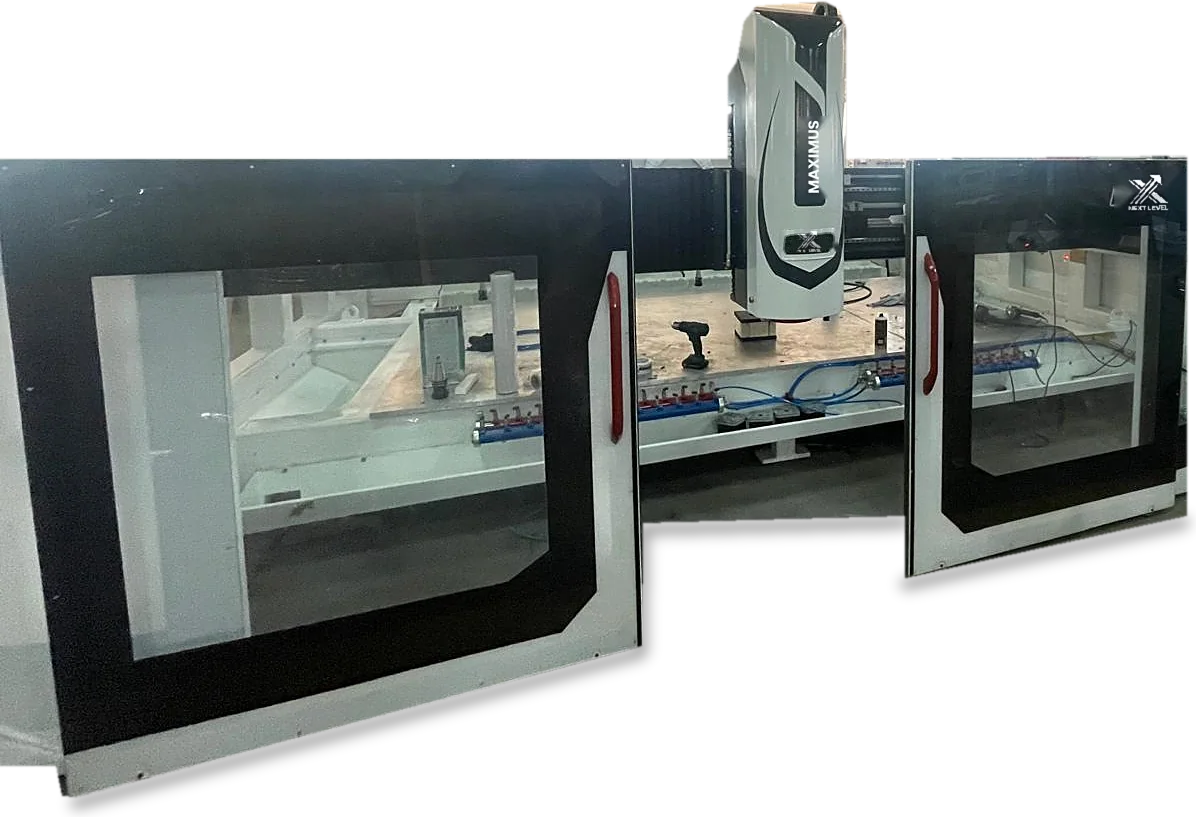
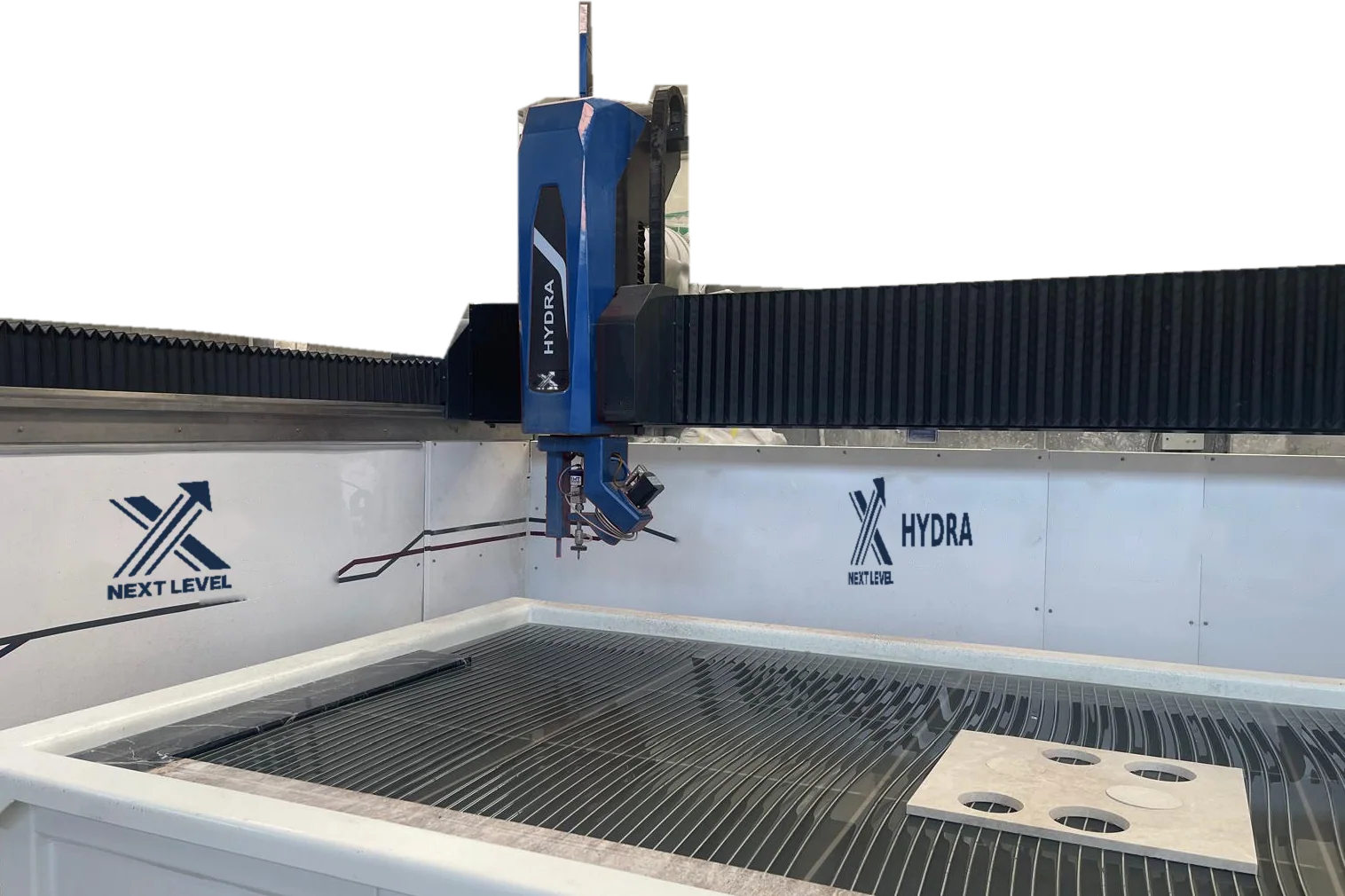
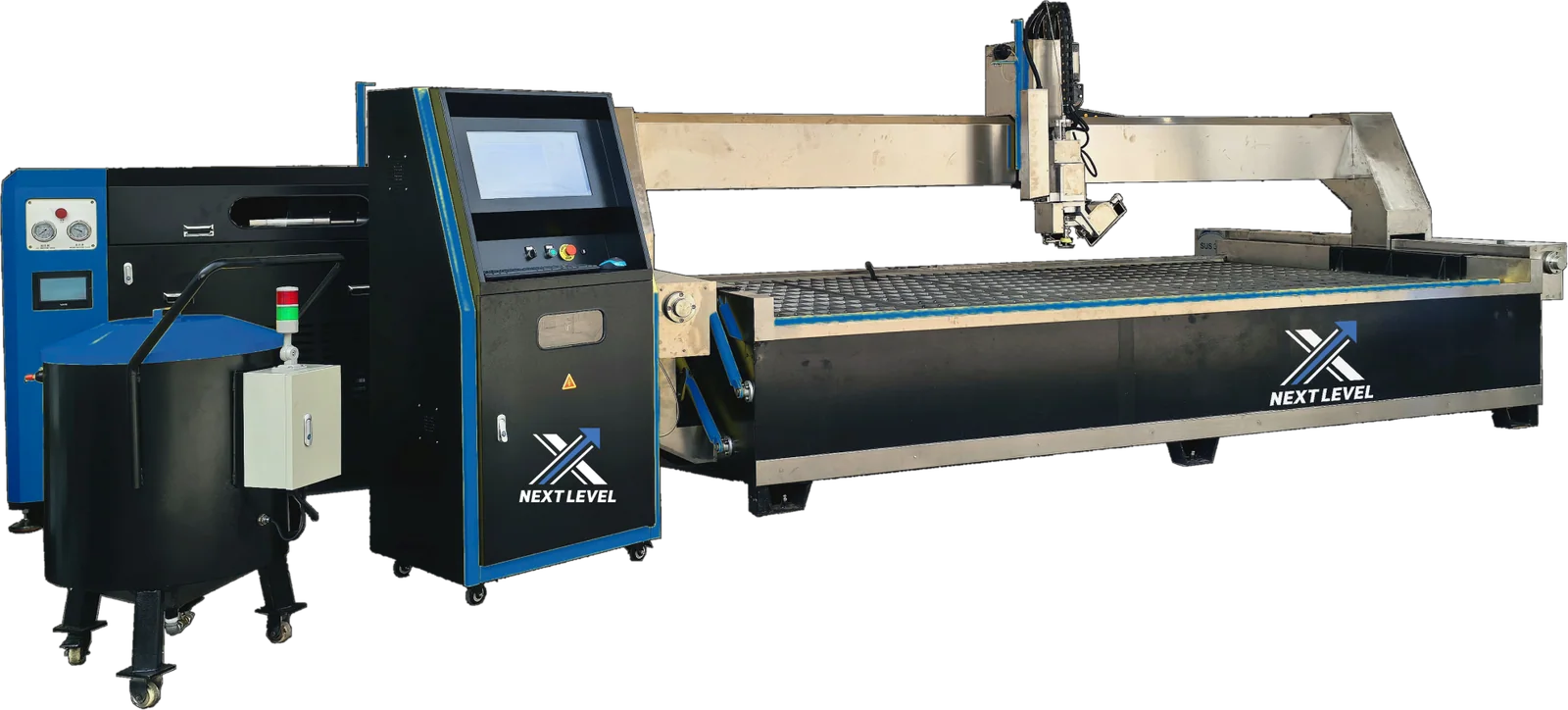
MAXIMUS is a 3-axis CNC working center with an ISO40 spindle, automatic tool changer and vacuum-pod workholding. HYDRA and Orca Jet are 5-axis abrasive waterjets. Review their individual head travel, table size, pump specifications and software. Do not infer a machine’s approved cut envelope from axis count or its maximum tilt alone.
Workholding and tool access
Describe slab thickness, finished-edge requirements, sink geometry and the material mix. For routing, confirm pod placement, tool clearance, holders and the tool sequence for the desired finish. For waterjet cutting, discuss inside radii, taper, support beneath the workpiece and part retention after cuts. Confirm the machine supplier’s application requirements for brittle, porous or laminated materials.
Plan utilities and ownership
Confirm water quality and pressure with the supplier of the actual spindle or high-pressure pump. General recycled shop water is not automatically suitable for every circuit. Include abrasive storage and disposal, pump service access, tooling, CAD/CAM licensing, training and rigging in the project review. Compare the complete installed scope and the consumables for your own workload.
Compare the quote
Use the same requirements for every supplier. Download a blank worksheet, keep one copy per proposal, and record the written evidence behind each answer.
Required cut and finish. Separate edge machining, pockets, holes and through-cuts. Request a representative finished sample, including inside corners.
Workholding and tool access. Request the fixtures, support method, tool reach and repositioning required for the proposed part.
Programming and process costs. Confirm file formats, software licenses, tooling or abrasive use, and any high-pressure pump service required by the quoted process.
Utilities and site work. Request the electrical, water, air, drainage, clearance and foundation requirements that apply to the quoted configuration. Identify who supplies each connection.
Complete quoted cost. Separate equipment, options, tooling, freight, tax, rigging, installation and training. Identify exclusions and the quote currency and validity.
Delivery and acceptance. Request the written delivery estimate, unloading responsibilities, commissioning scope and acceptance procedure.
Service and consumables. Request warranty terms, support coverage, consumable part numbers, maintenance intervals and quoted parts lead times.
Documented configuration. Keep the dated proposal, exact model and configuration, manuals and supplier answers together. Resolve conflicting specifications in writing.
Opens in spreadsheet software. Next Level does not receive the information you enter in your downloaded worksheet. This worksheet is not engineering approval or a purchase contract.
MAXIMUS is a 3-axis CNC working center for stone: a 15.8 kW ISO 40 spindle with a 24-position automatic tool changer machines on a 3,500 × 2,000 mm aluminum table that holds the work on vacuum pods. Pegasus 3-axis CAD/CAM runs on a 21-inch industrial touchscreen; the machine works behind safety doors with automatic lubrication.
HYDRA is a 5-axis CNC waterjet for stone. The tilting cutting head cuts bevels, miters, straight and curved shapes on a 4,000 × 2,000 mm hydraulic tilting table. A 37 kW (49.6 HP) intensifier pump supplies the cutting head, with automatic abrasive transfer and electronic dosing.
Orca Jet is a pure abrasive waterjet: no saw blade, one 5-axis cutting head. The head turns 360° and tilts up to 76°, so it cuts curves, sink holes, inside corners and bevels in granite, quartz, marble, sintered stone, porcelain and glass. It uses the same high-pressure pump and abrasive system as our TurboJet.
Not automatically. Cut quality and the final finish requirement are different criteria. Demonstrate the finished part and confirm any remaining machining or polishing steps.
Pure Cycle is a closed-loop filter press water recycling system made for the stone and granite fabrication industry. Compare filtration, process-water supply and solids handling against your shop’s requirements.
Choosing a CNC for granite starts with the work you need to finish: straight cuts, miters, drilling, milling or waterjet inside corners. Axis count alone does not tell you which operations a machine can complete.
A 3-in-1 compressor combines a rotary screw compressor, air dryer and receiver tank in one package. For a fabrication shop, compare delivered airflow and air quality at the required pressure, not horsepower alone.
A forklift for granite slabs must be selected around the complete load, attachment and travel route. The model name or nominal capacity is not permission to lift every slab of that weight.
A vacuum lifter robot for granite must move and position the slab safely at the actual reach you need. Compare a self-propelled robot with another robot, not just with a below-hook suction frame.
Start with the surface you need to finish: a slab face, a straight edge or a particular profile. Different polishing machines are designed for different work.
A site template records where the countertop must fit. A slab scan records the material you will cut. Connecting both correctly is the important workflow.
Plan the path from receiving to storage, fabrication and dispatch. Select each rack, cart, table and attachment for the actual load and the approved handling method.
Choose crane coverage around the pickup and placement locations. A lifting capacity alone does not define the reach, structure or complete installed system.