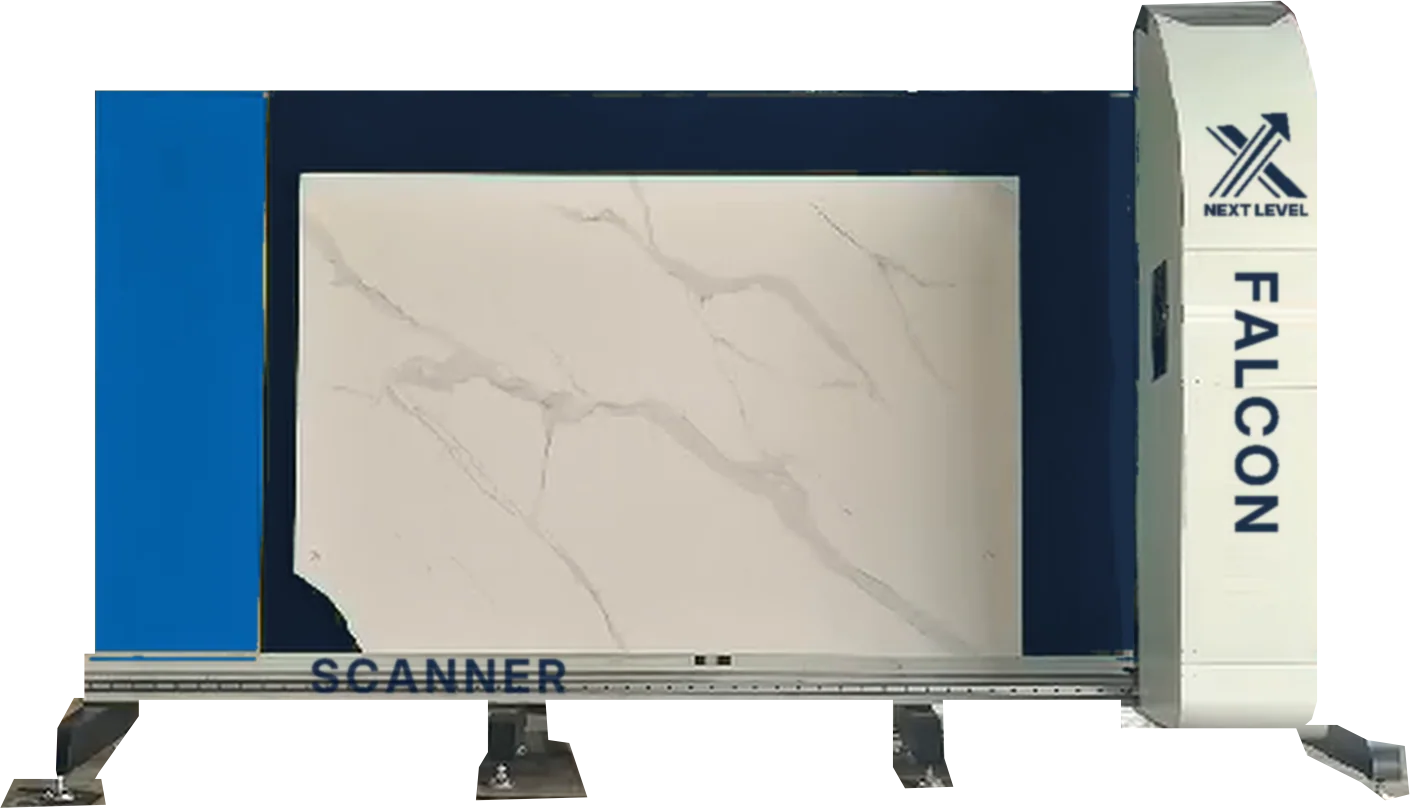
A site template records where the countertop must fit. A slab scan records the material you will cut. Connecting both correctly is the important workflow.
Falcon is a stone slab scanner; 3D Laser Template is a digital templating system. Slab images support layout and material review, while site measurements describe the installation geometry. Do not treat a slab photograph as an installation template or assume site-measurement data contains the slab’s veins and defects.
Connect the files
Identify the CAD/CAM software used by your saw or CNC, the file formats accepted and how scale, units and orientation are carried through the workflow. Ask for a demonstration from measurement or scanning through to a production-ready job. Confirm whether software licenses, exports, calibration tools, computers and training are included in the written configuration.
Review geometry and appearance
For templating, demonstrate wall angles, openings, overhangs and any height information relevant to your installation. For slab scanning, review image scale, lighting, usable slab boundaries and how defects or grain are marked. Obtain the product’s stated measurement specifications; an attractive image is not itself evidence of dimensional accuracy.
Keep a verification step
Use a repeatable review before fabrication: confirm units, appliance and sink information, seam decisions and the approved material layout. Discuss job revisions, file naming, backups and who releases a job for cutting. Ask the supplier how the workflow recovers after a rescan, corrected measurement or software update without accidentally manufacturing an obsolete revision.
Compare the quote
Use the same requirements for every supplier. Download a blank worksheet, keep one copy per proposal, and record the written evidence behind each answer.
Jobsite or slab input. Identify whether you need installed-opening geometry, slab dimensions and imagery, or both. Do not treat them as the same measurement.
File handoff. Request an example export and import into your actual CAD/CAM workflow, with units, origin and layers checked.
Verification method. Request the calibration procedure and a representative accuracy check before production. Document responsibility for verifying the final geometry.
Utilities and site work. Request the electrical, water, air, drainage, clearance and foundation requirements that apply to the quoted configuration. Identify who supplies each connection.
Complete quoted cost. Separate equipment, options, tooling, freight, tax, rigging, installation and training. Identify exclusions and the quote currency and validity.
Delivery and acceptance. Request the written delivery estimate, unloading responsibilities, commissioning scope and acceptance procedure.
Service and consumables. Request warranty terms, support coverage, consumable part numbers, maintenance intervals and quoted parts lead times.
Documented configuration. Keep the dated proposal, exact model and configuration, manuals and supplier answers together. Resolve conflicting specifications in writing.
Opens in spreadsheet software. Next Level does not receive the information you enter in your downloaded worksheet. This worksheet is not engineering approval or a purchase contract.
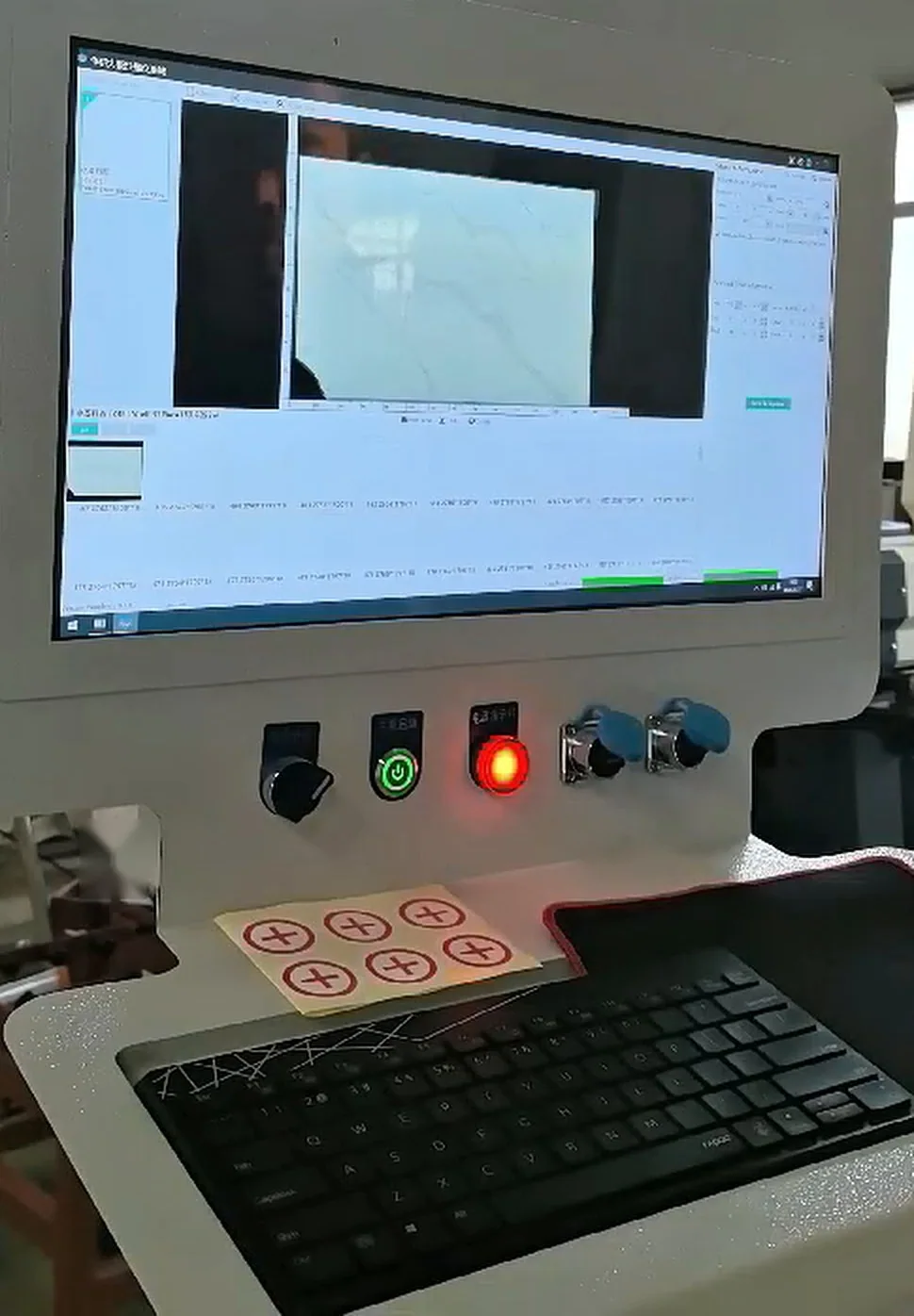
Falcon turns each slab into a true-color digital image at 1:1 scale. It scans the slab, calculates its size and sends image and size to your inventory, so customers see the real slab, designers lay out vein-matched parts on it and the shop finds every production record again.
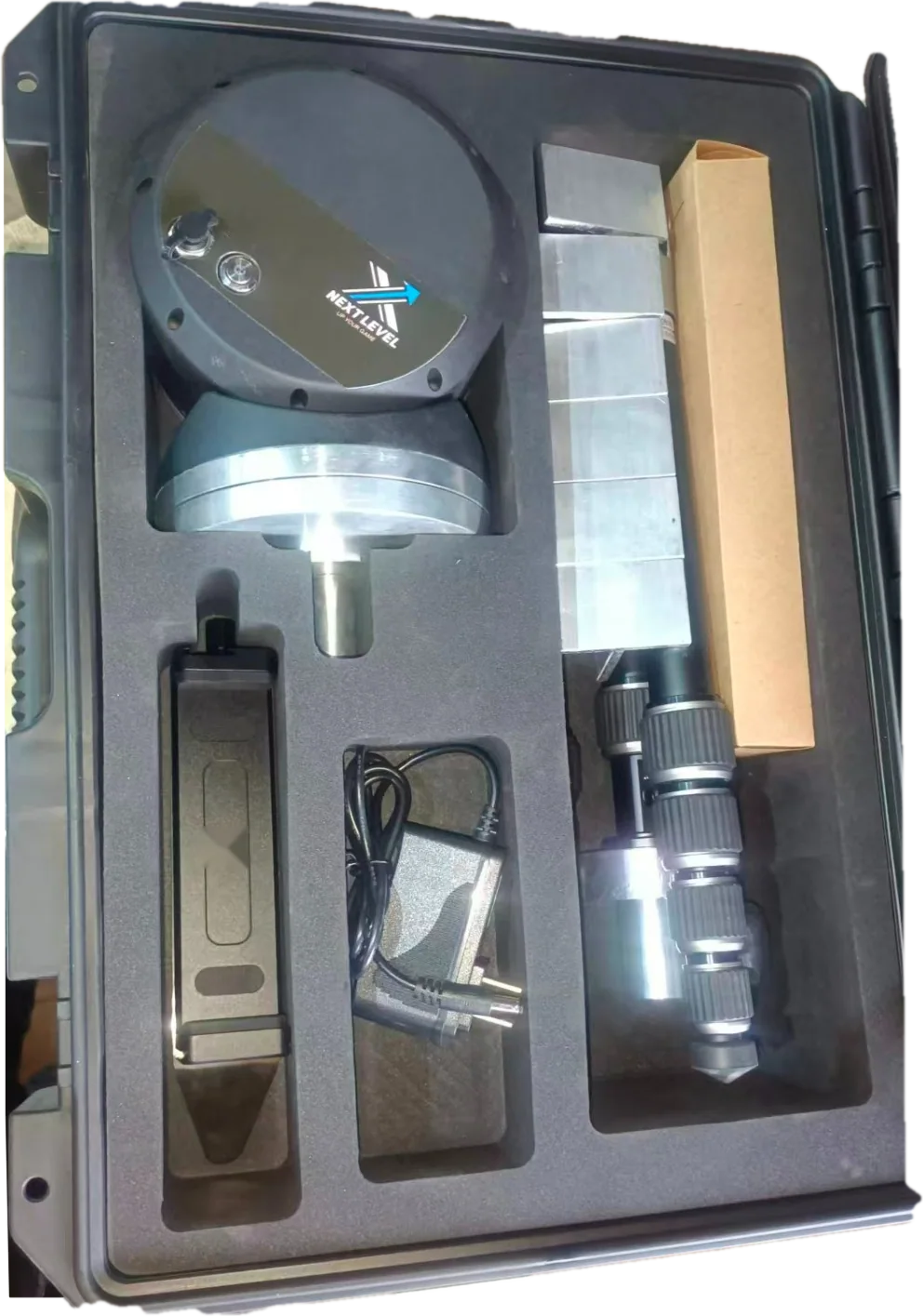
Measure kitchen countertops, walls and stairs on site with a laser head on a tripod. The tablet software draws the job as you measure, adds seams, sinks and dimensions, prints a drawing for the customer to sign and exports clean DXF lines for any CNC saw, sawjet or waterjet that reads DXF. No physical templates.
No. They collect different information. Use site measurements for fit and slab information for material layout, then verify the combined production job.
Pure Cycle is a closed-loop filter press water recycling system made for the stone and granite fabrication industry. Compare filtration, process-water supply and solids handling against your shop’s requirements.
Choosing a CNC for granite starts with the work you need to finish: straight cuts, miters, drilling, milling or waterjet inside corners. Axis count alone does not tell you which operations a machine can complete.
A 3-in-1 compressor combines a rotary screw compressor, air dryer and receiver tank in one package. For a fabrication shop, compare delivered airflow and air quality at the required pressure, not horsepower alone.
A forklift for granite slabs must be selected around the complete load, attachment and travel route. The model name or nominal capacity is not permission to lift every slab of that weight.
A vacuum lifter robot for granite must move and position the slab safely at the actual reach you need. Compare a self-propelled robot with another robot, not just with a below-hook suction frame.
Machining a finished edge and cutting an inside corner are different jobs. Choose the cutting process and tooling before comparing spindle power or axis count.
Start with the surface you need to finish: a slab face, a straight edge or a particular profile. Different polishing machines are designed for different work.
Plan the path from receiving to storage, fabrication and dispatch. Select each rack, cart, table and attachment for the actual load and the approved handling method.
Choose crane coverage around the pickup and placement locations. A lifting capacity alone does not define the reach, structure or complete installed system.