Choose crane coverage around the pickup and placement locations. A lifting capacity alone does not define the reach, structure or complete installed system.
A jib covers an area around its mounting point. A workstation system provides coverage along its configured runway and bridge. A top-running crane is another structural arrangement. Map the receiving, saw-table and storage locations, then confirm hook access, lift height and operating clearances with the supplier. Different coverage patterns are not interchangeable simply because their rated loads match.
Review the entire lifted load
Include the stone, rigging and lifter when reviewing the required capacity. Match the hoist, lifting attachment and structure to the approved system design. A vacuum lifter’s headline capacity does not increase the capacity of the crane supporting it. Ask how the design handles the actual load, travel pattern and operating environment rather than estimating from photographs.
Structure and site work
Have the appropriate qualified specialists confirm foundations, anchors, supporting structure, runway loads, electrical supply and installation conditions. Do not assume an existing slab, wall or building column is suitable. Plan service access and inspect the hook’s working envelope around doors, machines, racks and utilities. Keep engineered design and site approvals distinct from a conceptual shop layout.
Compare the written scope
The published package prices represent their listed starting configurations. Configured span, reach, height, capacity, hoist, controls and site requirements can change the project. Ask the written quote to identify equipment, freight, engineering, installation, testing and any lifter separately. Review inspection and maintenance responsibilities before commissioning; a website planner is not an engineered crane installation.
Compare the quote
Use the same requirements for every supplier. Download a blank worksheet, keep one copy per proposal, and record the written evidence behind each answer.
Pickup and placement coverage. Map pickup points, placement points, hook travel, working height and obstructions. Request a coverage drawing for the quoted system.
Complete suspended load. Include stone, rigging and the vacuum lifter or other below-hook device. Request approval of the complete hoist and crane arrangement.
Structure and installed scope. Request the required structural review, foundation and anchor design, runway or support scope, installation and inspection responsibilities.
Utilities and site work. Request the electrical, water, air, drainage, clearance and foundation requirements that apply to the quoted configuration. Identify who supplies each connection.
Complete quoted cost. Separate equipment, options, tooling, freight, tax, rigging, installation and training. Identify exclusions and the quote currency and validity.
Delivery and acceptance. Request the written delivery estimate, unloading responsibilities, commissioning scope and acceptance procedure.
Service and consumables. Request warranty terms, support coverage, consumable part numbers, maintenance intervals and quoted parts lead times.
Documented configuration. Keep the dated proposal, exact model and configuration, manuals and supplier answers together. Resolve conflicting specifications in writing.
Opens in spreadsheet software. Next Level does not receive the information you enter in your downloaded worksheet. This worksheet is not engineering approval or a purchase contract.
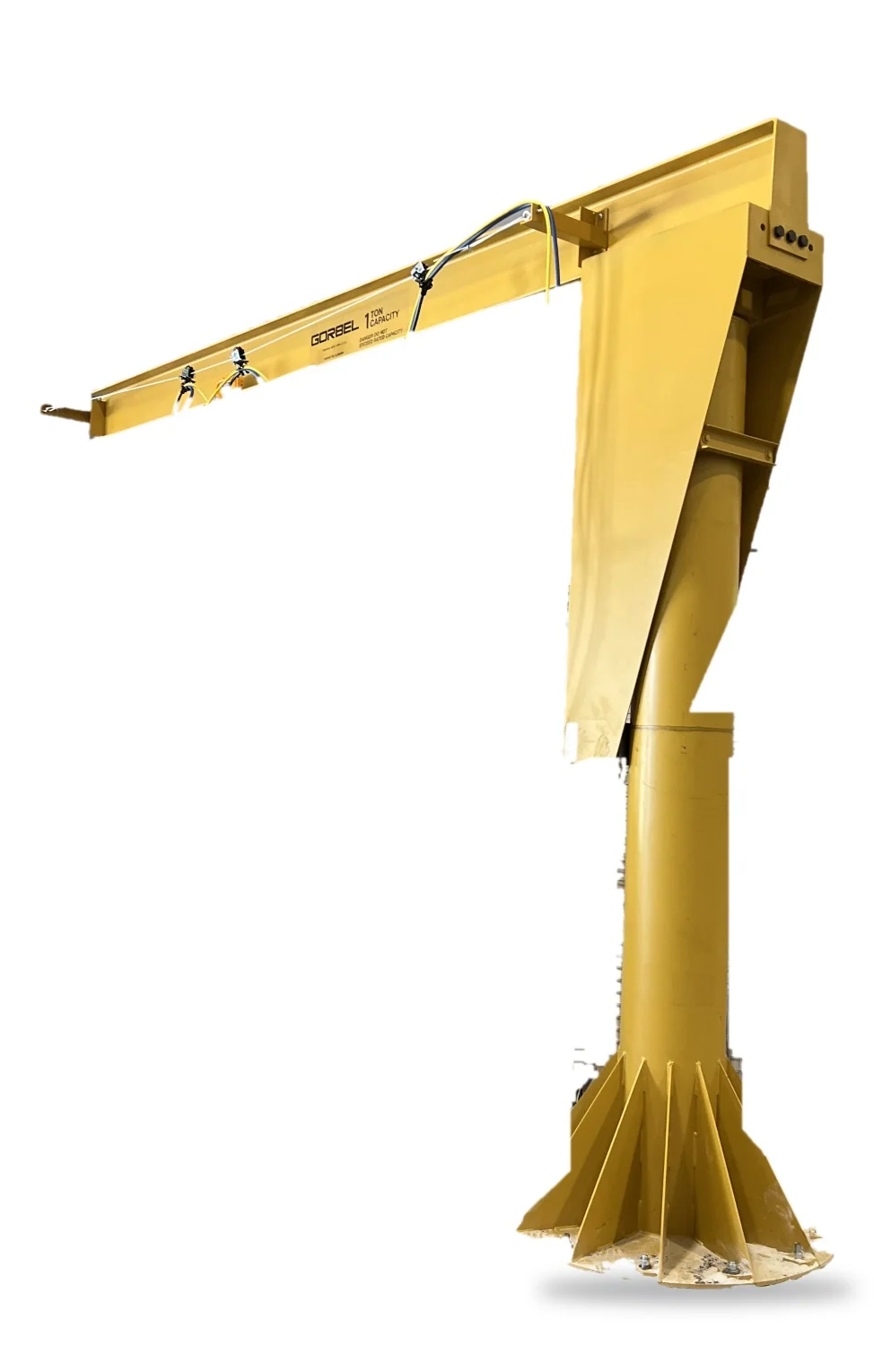
A complete slab-lifting station from one order: the Gorbel free-standing jib bolts to a suitable 6 in slab with no foundation to pour, the Gorbel electric chain hoist rides on the boom, and the Aardwolf AVLP4PRO vacuum lifter hangs from the hook. Next Level ships it and installs it.
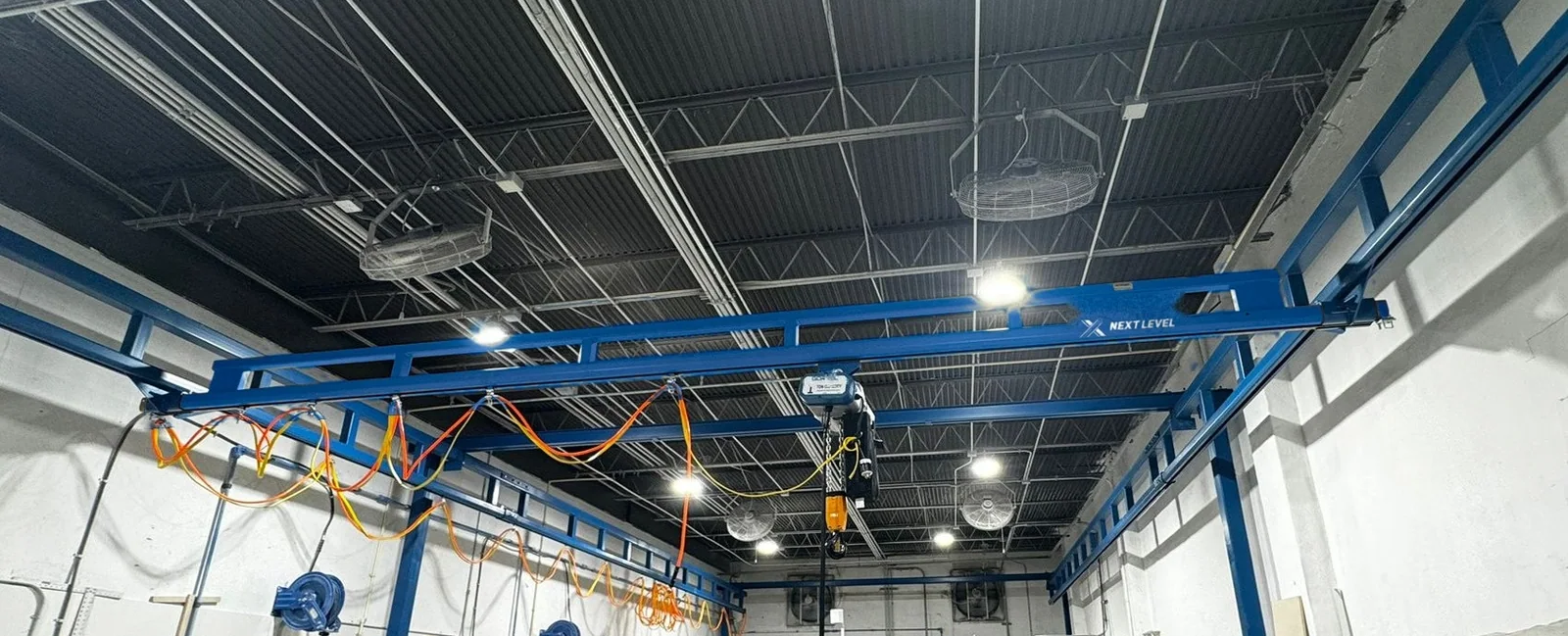
A freestanding bridge crane for a 35′-8″ × 75′ work area that needs nothing from the building: eight 14 ft columns and four headers carry two enclosed trussed runways and a RAL 5017 bridge with the upgraded two-speed hoist. Delivered and installed by Next Level.
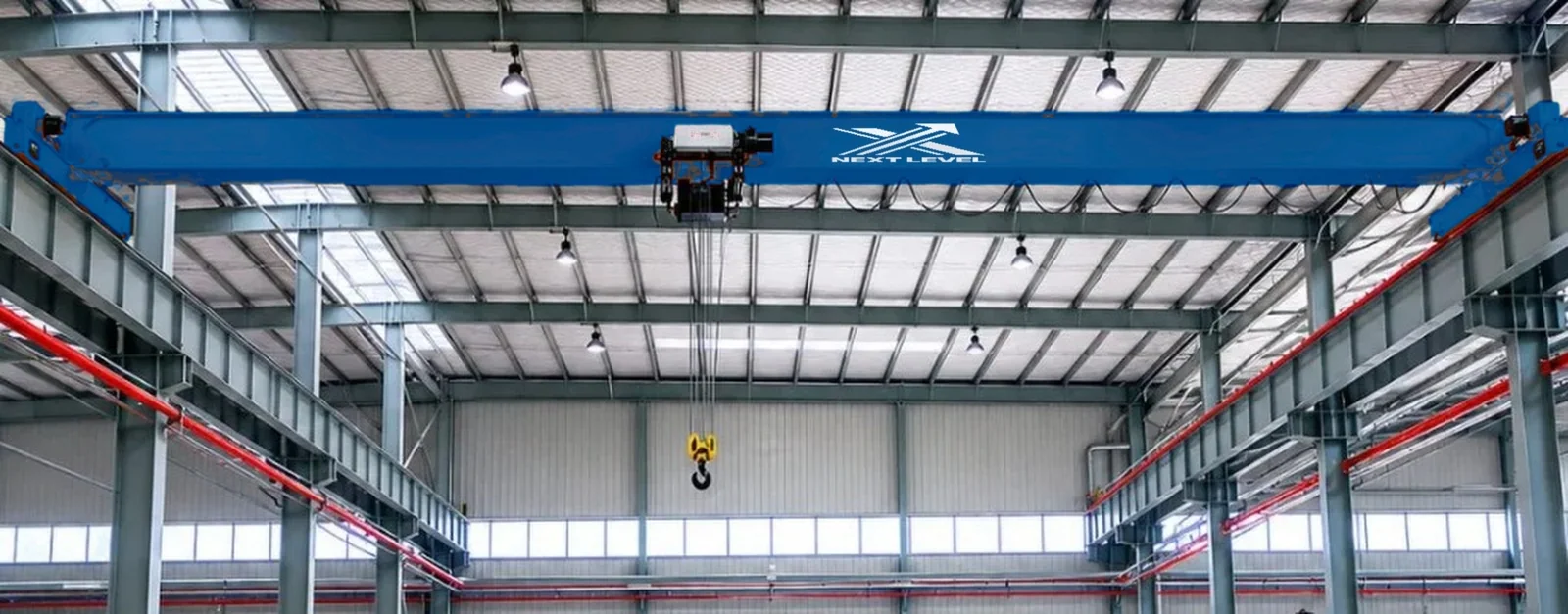
A single-girder top-running crane for a 50 ft × 90 ft bay. The RAL 5017 bridge runs on P18 rails above the runway beams at up to 98 ft/min, the hoist trolley is motorized, and everything runs from a wireless remote. Installation and delivery are in the price.
Pure Cycle is a closed-loop filter press water recycling system made for the stone and granite fabrication industry. Compare filtration, process-water supply and solids handling against your shop’s requirements.
Choosing a CNC for granite starts with the work you need to finish: straight cuts, miters, drilling, milling or waterjet inside corners. Axis count alone does not tell you which operations a machine can complete.
A 3-in-1 compressor combines a rotary screw compressor, air dryer and receiver tank in one package. For a fabrication shop, compare delivered airflow and air quality at the required pressure, not horsepower alone.
A forklift for granite slabs must be selected around the complete load, attachment and travel route. The model name or nominal capacity is not permission to lift every slab of that weight.
A vacuum lifter robot for granite must move and position the slab safely at the actual reach you need. Compare a self-propelled robot with another robot, not just with a below-hook suction frame.
Machining a finished edge and cutting an inside corner are different jobs. Choose the cutting process and tooling before comparing spindle power or axis count.
Start with the surface you need to finish: a slab face, a straight edge or a particular profile. Different polishing machines are designed for different work.
A site template records where the countertop must fit. A slab scan records the material you will cut. Connecting both correctly is the important workflow.
Plan the path from receiving to storage, fabrication and dispatch. Select each rack, cart, table and attachment for the actual load and the approved handling method.