A vacuum lifter robot for granite must move and position the slab safely at the actual reach you need. Compare a self-propelled robot with another robot, not just with a below-hook suction frame.
A self-propelled vacuum robot drives the load and positions it using a powered boom and pad frame. A below-hook vacuum lifter depends on a crane or other approved lifting system. They solve different parts of material handling. Decide whether the job is receiving, shop movement or final installation, and assess the complete travel route and positioning envelope.
Capacity changes with reach
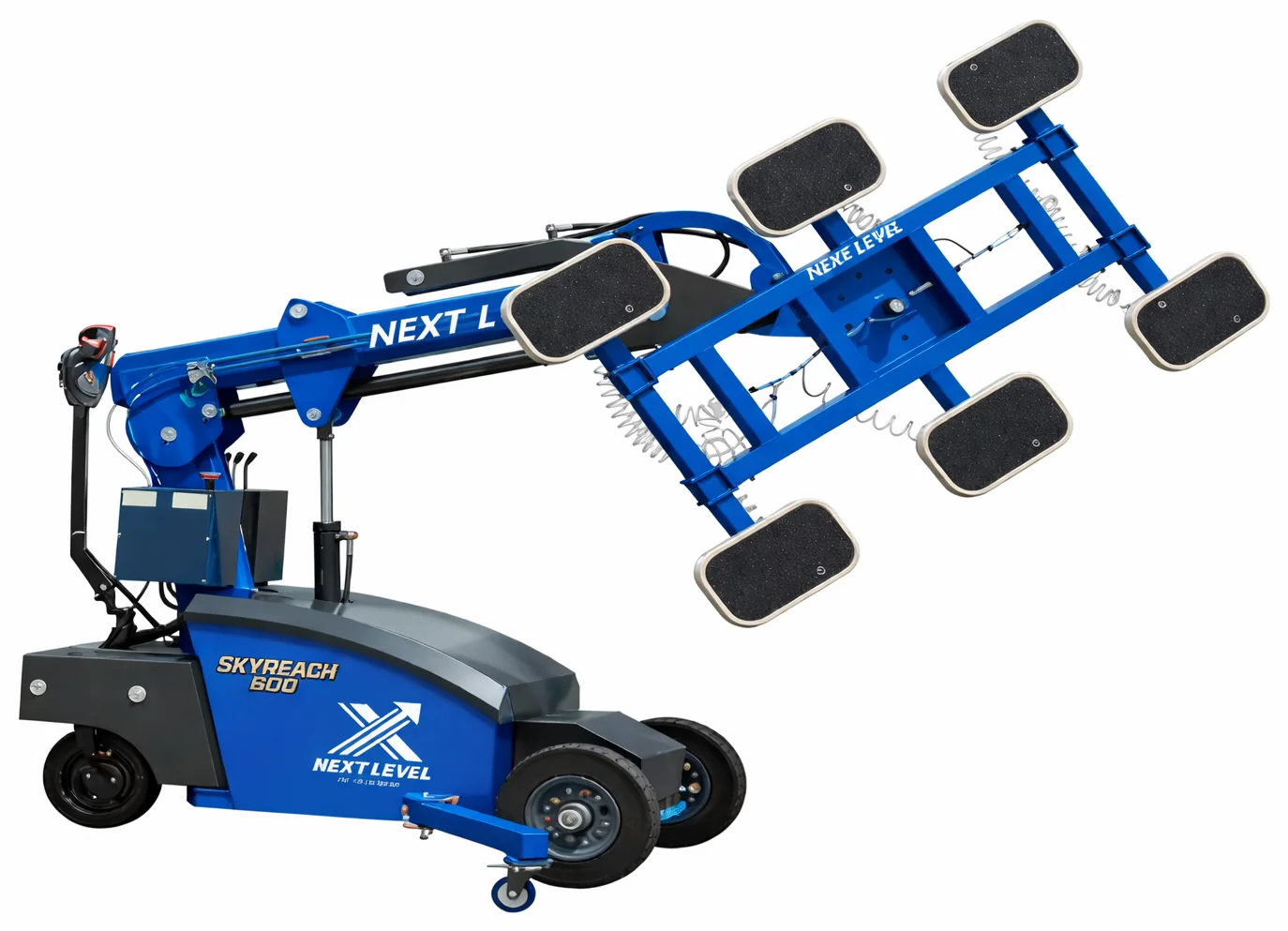
SkyReach 600 is a battery-electric, self-propelled vacuum lifting robot with six sponge pads, telescopic boom, side shift, rotation, tilt and wireless remote. The published retracted capacity is 600 kg (1,323 lb); at full extension it is 300 kg (661 lb). The chassis is 810 mm (31.9 in) wide. These figures do not replace the approved load chart or the surface and setup requirements. Never treat the maximum retracted figure as the capacity at every reach.
Compare with Smartlift
Smartlift’s official range describes self-propelled electric vacuum lifters for materials including stone. Its SL 309 Outdoor page specifically lists granite and marble among applications. If comparing SL 309 or another Smartlift model with SkyReach 600, ask for capacity at the same horizontal extension and height, approved pad arrangement, surface condition, terrain and counterweight setup. A maximum load figure alone does not establish equal capability, and an outdoor application listing does not make every configuration suitable for every slab.
Check the surface and site
Describe the slab face, texture, porosity, thickness, weight and orientation to the supplier. Ask which pads and vacuum settings are approved and how the machine verifies vacuum before movement. Measure doors, thresholds, floor slopes and the space needed to turn with the load. Confirm the permitted operating surface and environment; SkyReach 600 is described for indoor installations. Evaluate battery charging and storage requirements against your working schedule.
Demonstrate the actual lift
Have the supplier demonstrate pickup, travel and placement with a representative approved load, including the required extension and tilt. Review the vacuum alarm, emergency controls, recovery procedure and daily checks with the operator. Confirm what the quote includes: pads, charger, batteries, transport arrangement, training and any options. Keep people clear of the load and follow the machine’s approved operating instructions rather than inferring a method from promotional photos.
Compare the quote
Use the same requirements for every supplier. Download a blank worksheet, keep one copy per proposal, and record the written evidence behind each answer.
Load at the required reach. Request the approved load chart for the slab weight, boom extension, lift height and pad-frame position used on your job.
Material and vacuum grip. Have the supplier approve the material surface, porosity, pad arrangement and operating procedure. Request alarm and emergency-lowering instructions.
Access and positioning. Measure doors, thresholds, slopes and working room with the slab attached. Request a demonstration of the complete movement.
Utilities and site work. Request the electrical, water, air, drainage, clearance and foundation requirements that apply to the quoted configuration. Identify who supplies each connection.
Complete quoted cost. Separate equipment, options, tooling, freight, tax, rigging, installation and training. Identify exclusions and the quote currency and validity.
Delivery and acceptance. Request the written delivery estimate, unloading responsibilities, commissioning scope and acceptance procedure.
Service and consumables. Request warranty terms, support coverage, consumable part numbers, maintenance intervals and quoted parts lead times.
Documented configuration. Keep the dated proposal, exact model and configuration, manuals and supplier answers together. Resolve conflicting specifications in writing.
Opens in spreadsheet software. Next Level does not receive the information you enter in your downloaded worksheet. This worksheet is not engineering approval or a purchase contract.
A battery-electric vacuum lifter that drives itself to the slab, picks it up on six sponge pads and places it: the boom lifts, telescopes and shifts sideways, and the pad frame turns 360° and tilts, all from a wireless remote. At 810 mm (31.9 in) wide it is built for indoor installations.
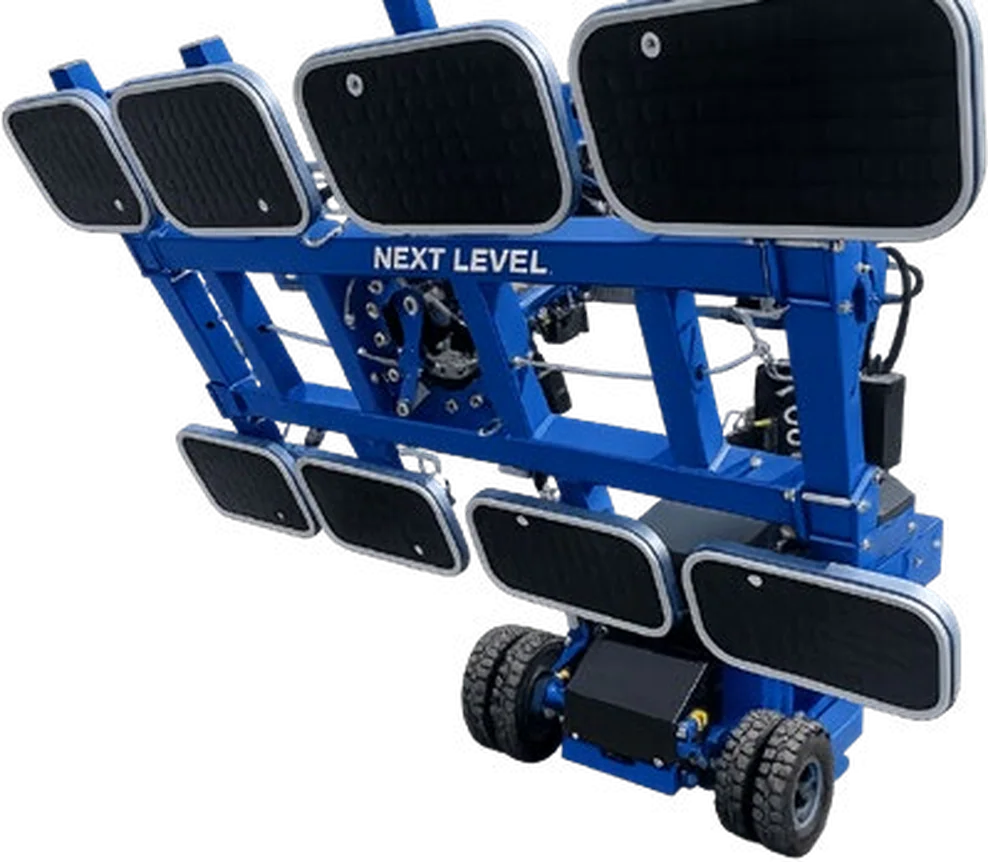
The big SkyReach, for larger slabs and higher placements on smooth floors. Eight sponge pads hold up to 1,764 lb (800 kg); the boom lifts to 16 ft 5 in (5,000 mm), and the pad frame turns 360° and tilts under power, all from a wireless remote.
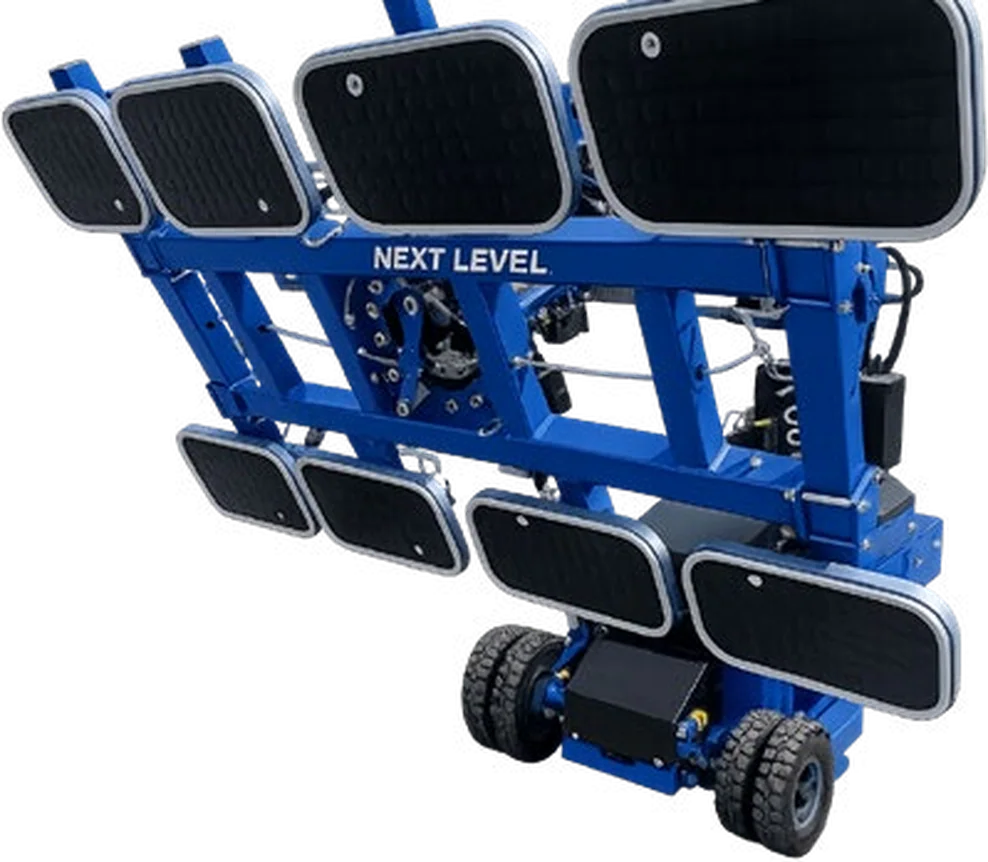
The SkyReach 800 on big pneumatic tires, for job sites and rough ground. Eight sponge pads hold up to 1,764 lb (800 kg); the boom lifts to 16 ft 5 in (5,000 mm), and the pad frame turns 360° and tilts under power, all from a wireless remote.
Self-propelled electric range and SL 309 granite/marble application description.
Buying questions
Can SkyReach 600 lift 600 kg fully extended?
No. Its published fully extended capacity is 300 kg. Use the approved load chart for the actual reach, height, pad setup and operating conditions.
Will suction work on every granite face?
Do not assume so. The supplier must approve the material surface, pad configuration and operating conditions. Follow the vacuum system and machine instructions.
How is a vacuum lifting robot different from a crane-mounted lifter?
A self-propelled robot drives and positions the load using its own powered chassis and boom. A below-hook lifter depends on a separate approved crane or lifting system. Compare the site access, travel route and actual load chart for the intended job.
Pure Cycle is a closed-loop filter press water recycling system made for the stone and granite fabrication industry. Compare filtration, process-water supply and solids handling against your shop’s requirements.
Choosing a CNC for granite starts with the work you need to finish: straight cuts, miters, drilling, milling or waterjet inside corners. Axis count alone does not tell you which operations a machine can complete.
A 3-in-1 compressor combines a rotary screw compressor, air dryer and receiver tank in one package. For a fabrication shop, compare delivered airflow and air quality at the required pressure, not horsepower alone.
A forklift for granite slabs must be selected around the complete load, attachment and travel route. The model name or nominal capacity is not permission to lift every slab of that weight.
Machining a finished edge and cutting an inside corner are different jobs. Choose the cutting process and tooling before comparing spindle power or axis count.
Start with the surface you need to finish: a slab face, a straight edge or a particular profile. Different polishing machines are designed for different work.
A site template records where the countertop must fit. A slab scan records the material you will cut. Connecting both correctly is the important workflow.
Plan the path from receiving to storage, fabrication and dispatch. Select each rack, cart, table and attachment for the actual load and the approved handling method.
Choose crane coverage around the pickup and placement locations. A lifting capacity alone does not define the reach, structure or complete installed system.