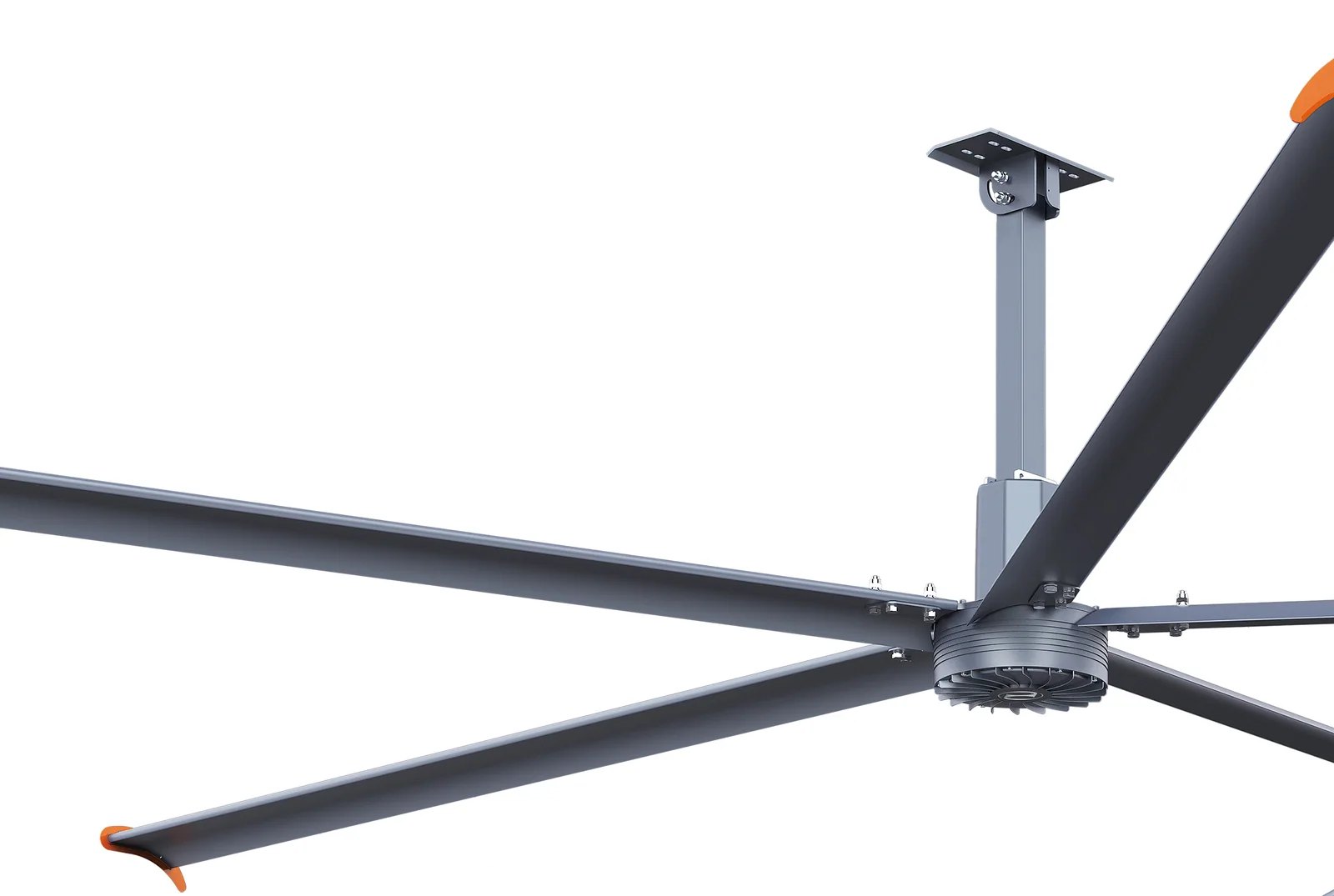
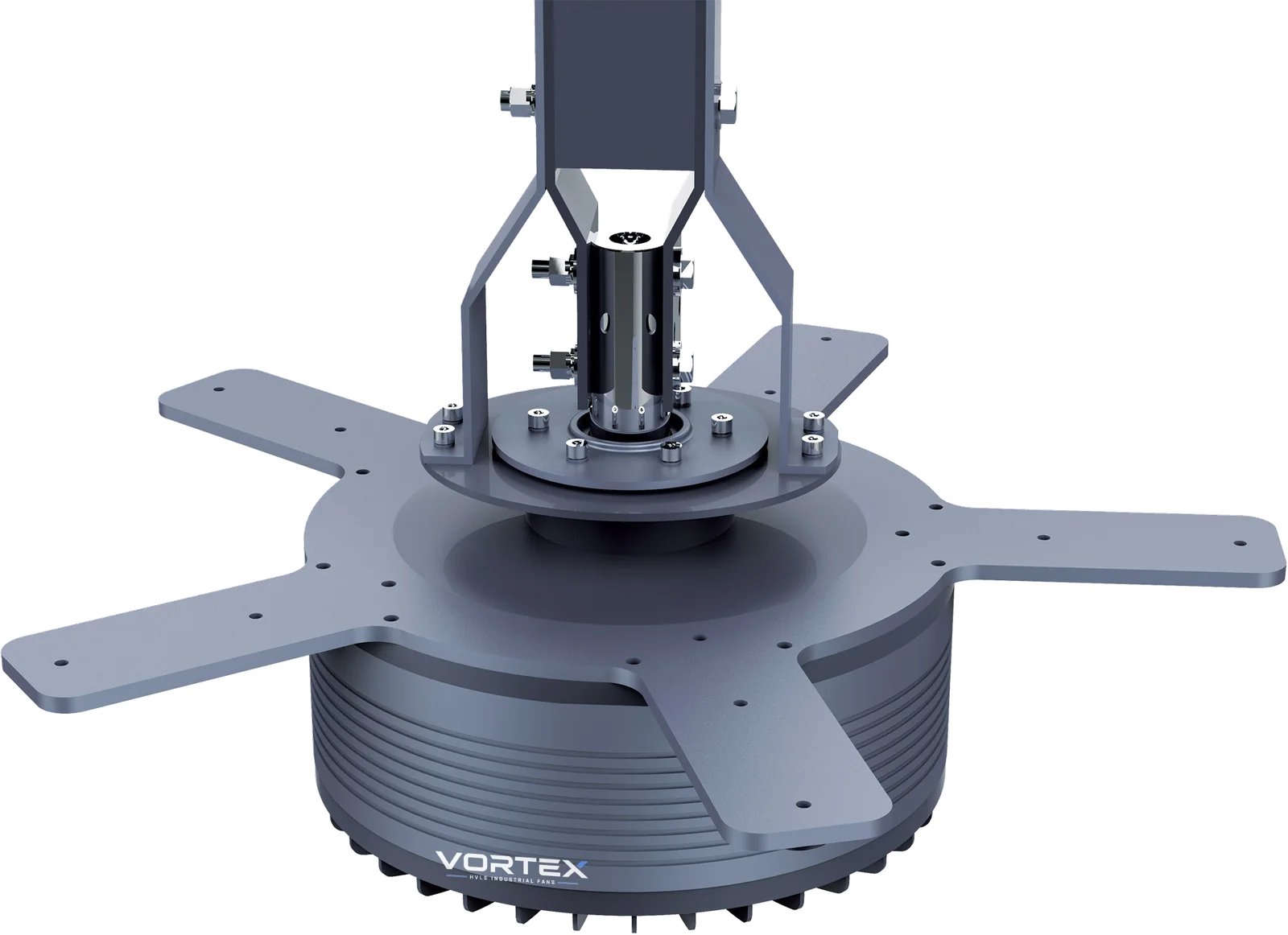
The Vortex product is an HVLS shop fan. A fan circulates air; it is not a stone-dust collection system or a replacement for exposure controls. Review how airflow interacts with wet cutting, dust collection and people in the working area. Have the appropriate professionals assess ventilation and occupational exposure requirements separately.
Confirm the mounting envelope
Use the fan’s own dimensions and installation requirements to review roof structure, clearances, lights, sprinklers, cranes and other obstructions. Confirm electrical service, controls and maintenance access. Do not assume that a large floor area alone determines an approved fan location or that a conceptual planner confirms mounting suitability.
Light the task
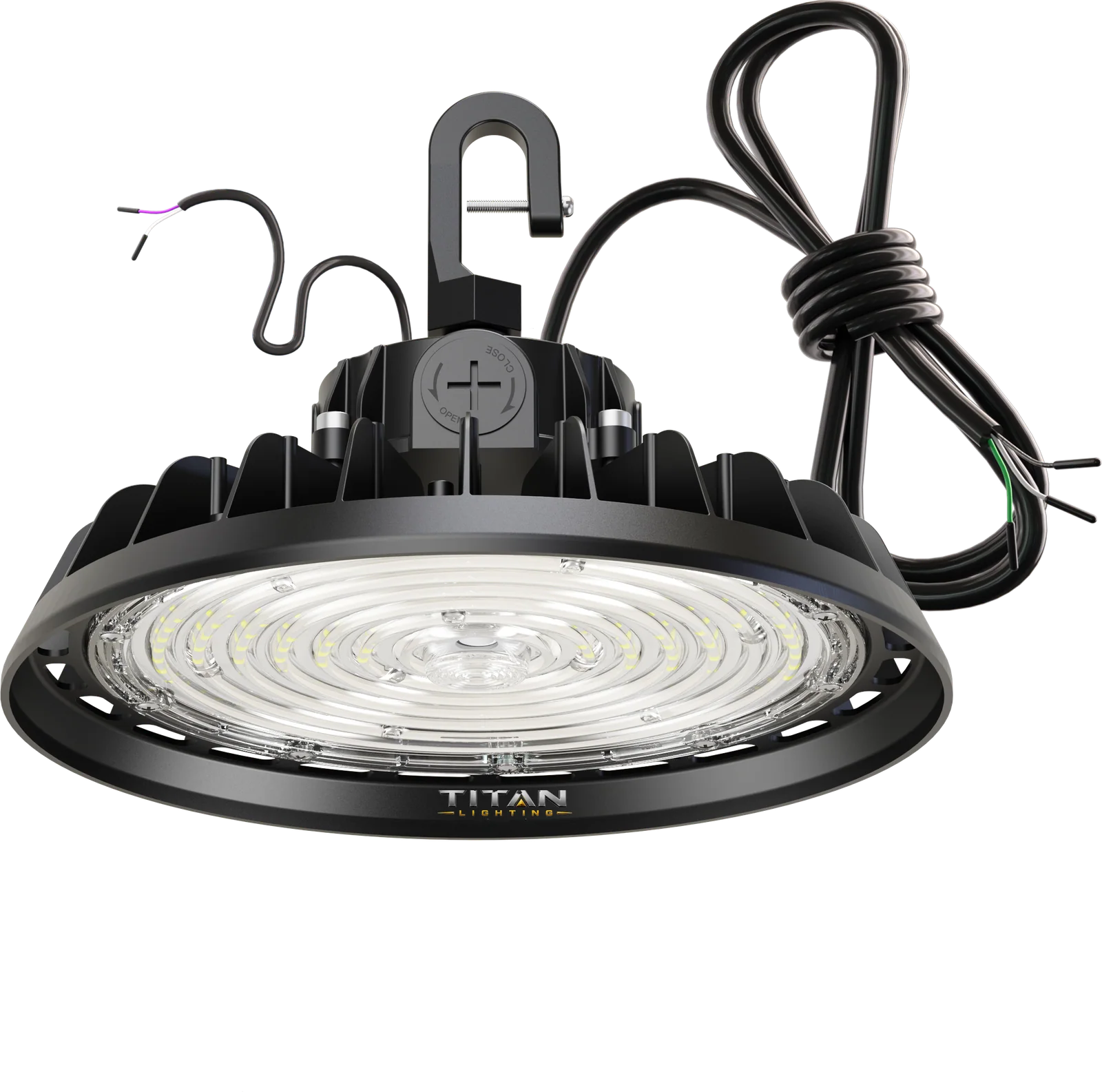
Titan is a 150 W LED high-bay product. Wattage alone does not establish illumination at the work surface. Review mounting height, beam distribution, layout, glare and the visual task with the product’s specifications and an appropriate lighting plan. Slab inspection, fabrication and circulation areas can have different requirements.
Coordinate the building systems
Ask the installers to review fan and light positions together with crane travel, overhead services, access and any required emergency lighting. Confirm mounts, controls, wiring, freight and installation in the written scope. Compare specifications at the intended operating conditions rather than using a product image as a design drawing.
Compare the quote
Use the same requirements for every supplier. Download a blank worksheet, keep one copy per proposal, and record the written evidence behind each answer.
Air movement and exposure control. Define the comfort-airflow requirement separately from dust capture and exposure control. Request the proposed coverage and operating limitations.
Mounting and clearances. Request mounting details and required separation from cranes, sprinklers, lights, machines and stored material.
Task lighting. Identify cutting, inspection and circulation areas. Request the lighting layout, glare considerations and maintenance access for the actual mounting height.
Utilities and site work. Request the electrical, water, air, drainage, clearance and foundation requirements that apply to the quoted configuration. Identify who supplies each connection.
Complete quoted cost. Separate equipment, options, tooling, freight, tax, rigging, installation and training. Identify exclusions and the quote currency and validity.
Delivery and acceptance. Request the written delivery estimate, unloading responsibilities, commissioning scope and acceptance procedure.
Service and consumables. Request warranty terms, support coverage, consumable part numbers, maintenance intervals and quoted parts lead times.
Documented configuration. Keep the dated proposal, exact model and configuration, manuals and supplier answers together. Resolve conflicting specifications in writing.
Opens in spreadsheet software. Next Level does not receive the information you enter in your downloaded worksheet. This worksheet is not engineering approval or a purchase contract.
A 4.2 m (13 ft 9 in) high-volume, low-speed ceiling fan for shops, warehouses and slab yards. Five long aluminum blades move a large column of air slowly down to the floor and out across the room, driven by a direct-drive permanent-magnet motor with no gearbox to service.
A round 150 W LED high bay for shops and warehouses: up to 22,500 lumens of 5000 K daylight-white light from a sealed die-cast body. Set 90, 120 or 150 W on the light to suit the mounting height, and dim it with a 0–10 V dimmer.
Pure Cycle is a closed-loop filter press water recycling system made for the stone and granite fabrication industry. Compare filtration, process-water supply and solids handling against your shop’s requirements.
Choosing a CNC for granite starts with the work you need to finish: straight cuts, miters, drilling, milling or waterjet inside corners. Axis count alone does not tell you which operations a machine can complete.
A 3-in-1 compressor combines a rotary screw compressor, air dryer and receiver tank in one package. For a fabrication shop, compare delivered airflow and air quality at the required pressure, not horsepower alone.
A forklift for granite slabs must be selected around the complete load, attachment and travel route. The model name or nominal capacity is not permission to lift every slab of that weight.
A vacuum lifter robot for granite must move and position the slab safely at the actual reach you need. Compare a self-propelled robot with another robot, not just with a below-hook suction frame.
Machining a finished edge and cutting an inside corner are different jobs. Choose the cutting process and tooling before comparing spindle power or axis count.
Start with the surface you need to finish: a slab face, a straight edge or a particular profile. Different polishing machines are designed for different work.
A site template records where the countertop must fit. A slab scan records the material you will cut. Connecting both correctly is the important workflow.
Plan the path from receiving to storage, fabrication and dispatch. Select each rack, cart, table and attachment for the actual load and the approved handling method.
Choose crane coverage around the pickup and placement locations. A lifting capacity alone does not define the reach, structure or complete installed system.